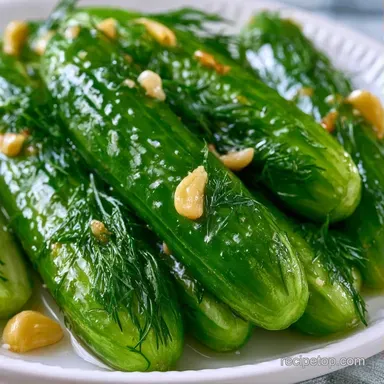
Fresh Dill Refrigerator Pickles with Garlic
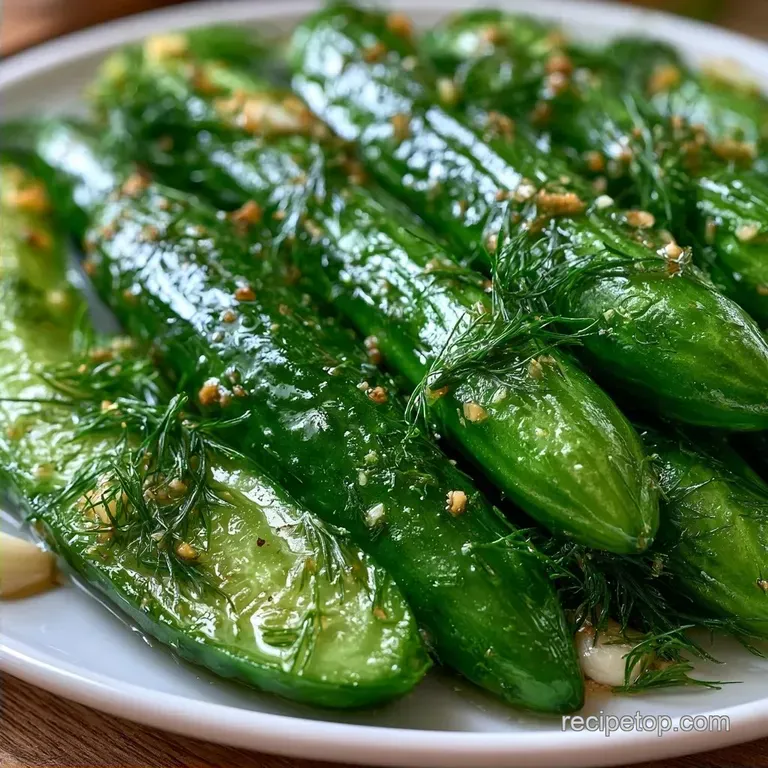
- Time: 15 min active + 48 hours chilling
- Flavor/Texture Hook: Sharp, vinegary snap with fresh garlic
- Perfect for: Healthy meal prep and low calorie snacking
- Dill Refrigerator Pickles
- Quick Specs for Your Batch
- Essential Ingredients and Substitutions
- Tools for the Job
- Steps to Create the Batch
- Fixing Common Texture Issues
- Different Flavor Twists to Try
- Storage and Waste Reduction
- Serving and Visual Appeal
- The Role of Cucumber Choice
- High in Sodium
- Recipe FAQs
- 📝 Recipe Card
The smell of fresh cut dill and smashed garlic fills the kitchen the second you start this. There is something about that sharp, acidic aroma that just makes you crave a cold sandwich. I remember the first time I tried to make these, I used English cucumbers, and they turned into soft, limp sticks.
It was a total letdown until I realized the type of cucumber is the only thing that actually matters.
You can expect a bright, punchy flavor that doesn't overpower the vegetable. These are a great way to add a balanced, probiotic adjacent crunch to your diet without the added sugars found in store-bought brands.
Making Dill Refrigerator Pickles is mostly about patience. You do the work in fifteen minutes, then you let the fridge do the heavy lifting for two days.
Dill Refrigerator Pickles
- Plain label
- The Acid Balance. Vinegar prevents spoilage and provides that signature tang.
- Plain label
- Salt Osmosis. The salt draws water out of the cucumber cells, which keeps them from getting mushy.
- Plain label
- Cold Cure. Chilling slowly infuses the aromatics without cooking the vegetable.
| Feature | Fast Chill Method | Classic Cold Cure |
|---|---|---|
| Chill Time | 24 hours | 48 hours |
| Flavor Profile | Sharp, vinegary | Balanced, mellow |
| Texture | Good snap | Maximum crunch |
| Best For | Immediate cravings | Long term meal prep |
Ingredient Deep Dive
| Ingredient | What It Does | Best Swap |
|---|---|---|
| Kirby Cucumber | Provides structural crunch | Persian Cucumber |
| White Vinegar | Primary preservative | Apple Cider Vinegar |
| Kosher Salt | Controls moisture | Sea Salt |
Quick Specs for Your Batch
I focus on keeping these balanced. Using distilled vinegar and filtered water ensures no mineral interference with the flavor. The small amount of sugar isn't for sweetness, but to take the edge off the acetic acid.
For those watching their sodium, according to the USDA FoodData, salt is essential for texture here, but you can use a potassium based salt substitute if needed. Just keep in mind it might slightly alter the taste.
Essential Ingredients and Substitutions
- 2 lbs Kirby or Persian cucumbers, sliced into spears or rounds Why this? Thick skins prevent them from collapsing
- 1/2 cup fresh dill, roughly chopped Why this? Fresh has more volatile oils than dried
- 6 cloves garlic, smashed and peeled Why this? Smashed cloves release more allicin
- 2 cups white distilled vinegar Why this? Neutral taste lets the dill shine
- 1 cup filtered water Why this? Avoids chlorine tastes from tap water
- 2 tbsp kosher salt Why this? Dissolves faster than table salt
- 1 tbsp granulated sugar Why this? Balances the sharp acidity
- 1 tsp mustard seeds Why this? Adds a subtle, earthy depth
- 1 tsp whole black peppercorns Why this? Provides slow release heat
- 1/2 tsp red pepper flakes Why this? Tiny kick at the end
Tools for the Job
You will need four clean pint sized glass jars. I prefer wide mouth jars because it makes packing the spears much easier. A medium saucepan is necessary for the brine, and a sharp chef's knife is a must for clean cucumber cuts.
Make sure your jars are thoroughly washed. Since we aren't boiling the jars for canning, any residue can affect the clarity of the brine.
Steps to Create the Batch
- Divide the smashed garlic cloves, fresh dill sprigs, and aromatic seeds evenly among the four clean glass jars.
- Pack the cucumber spears tightly into the jars, leaving about 1/2 inch of headspace at the top. Note: Tighter packing prevents floating
- Combine the white vinegar, water, kosher salt, and sugar in a saucepan over medium heat.
- Stir constantly until the salt and sugar have completely dissolved and the liquid just reaches a simmer; do not let it reach a rolling boil.
- Carefully pour the hot brine over the cucumbers in each jar, ensuring they are fully submerged.
- Seal the lids tightly.
- Let the jars sit on the counter until they reach room temperature.
- Transfer them immediately to the refrigerator and chill for at least 48 hours before opening. until the brine is cold and cucumbers are translucent
Fixing Common Texture Issues
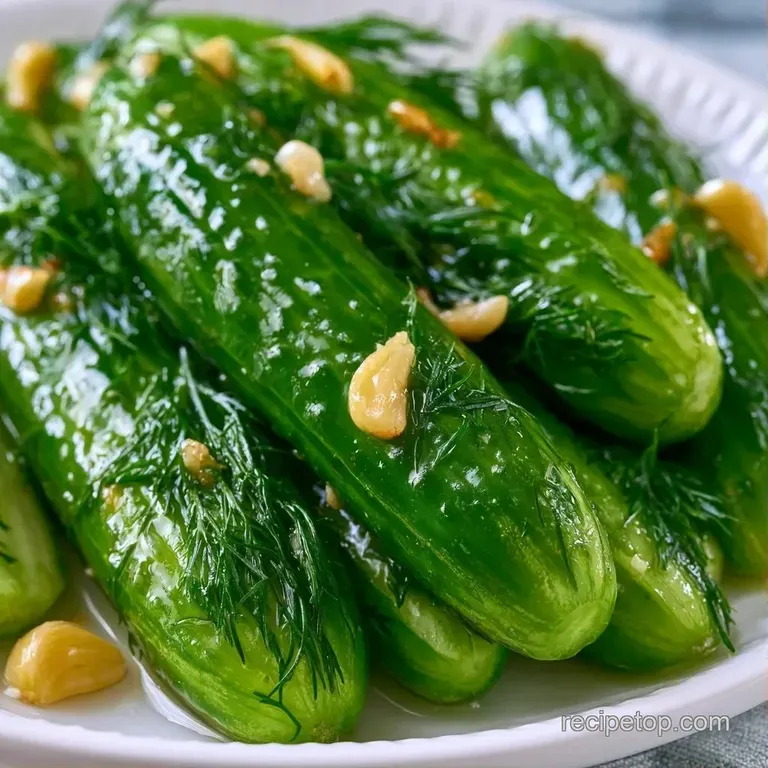
The most common problem people have with Dill Refrigerator Pickles is the "mush factor." This usually happens because the brine was too hot when poured or the wrong cucumber was used.
Why Your Pickles Turned Out Mushy
If you use English cucumbers, the higher water content often leads to a soft texture. Also, if the brine is boiling, it partially cooks the cucumber.
| Problem | Root Cause | Solution |
|---|---|---|
| Soft Texture | English cucumbers used | Use Kirby or Persian varieties |
| Cloudy Brine | Impure water used | Use filtered or distilled water |
| Bland Taste | Not enough salt | Increase salt by 1 tsp next time |
Different Flavor Twists to Try
If you want something with more heat, you can add sliced jalapeños to the jars. I've found that adding a strip of lemon peel adds a bright, citrusy note that works well with the dill. For a totally different vibe, you can try Spicy Refrigerator Pickles if you like a real burn.
You could also swap the white vinegar for apple cider vinegar. This makes the brine slightly sweeter and more golden, which is great for sandwiches.
Storage and Waste Reduction
These Dill Refrigerator Pickles stay crisp in the fridge for about 4 to 6 weeks. Keep them tightly sealed to prevent the vinegar scent from taking over your refrigerator.
Don't toss the leftover brine. It is essentially a seasoned vinegar. I use it as a marinade for grilled chicken or pour a tablespoon over a kale salad to act as a quick dressing. For more ideas on longevity, my Pickles for Meal Prep recipe guide covers extended storage.
Serving and Visual Appeal
For the best look, slice the cucumbers into uniform spears. This allows the brine to penetrate evenly and looks a lot cleaner in the jar. When serving, I like to pull out a few sprigs of the fresh dill to garnish the plate.
These pair well with lean proteins like grilled turkey or chickpeas. The acidity helps cut through the richness of other foods, making the meal feel more balanced.
The Role of Cucumber Choice
The biggest mistake in this recipe is using the wrong produce. As noted by Serious Eats, Kirby cucumbers are specifically bred for pickling because they have a denser cell structure. English cucumbers have too much water, which ruins the snap of Dill Refrigerator Pickles.
Choosing the right cucumber ensures that the osmosis process works correctly. The denser skin keeps the brine from flooding the center too quickly, which preserves that satisfying crunch.
Chef's Note: If you can't find Kirby cucumbers, look for "pickling cucumbers" specifically. Avoid the large, waxy slicing cucumbers you see in most grocery stores; they are simply too watery for this method.
Scaling Your Batch
If you are making a smaller batch, you can easily halve the recipe. Just use two pint jars instead of four and reduce the liquid amounts.
When scaling up to 4x the recipe, don't quadruple the salt and spices. I recommend using 1.5x the salt and spices for every 2x increase in vegetables. This prevents the flavor from becoming too aggressive. If you're doubling the brine, reduce the total liquid by about 10% to ensure the jars remain tightly packed.
Debunking Pickle Myths
Some people think you need to boil the jars to make them safe. That is only for shelf stable canning. Since these are stored in the fridge, the cold temperature and vinegar do the preserving.
Another myth is that you must use sugar to get a good flavor. Sugar is optional. It just rounds out the sharp edges of the vinegar, but the pickles will still be great without it.
High in Sodium
989 mg 989 mg of sodium per serving (43% 43% of daily value)
The American Heart Association recommends a daily limit of no more than 2,300 mg of sodium to reduce the risk of high blood pressure and heart disease.
Tips to Reduce Sodium
-
Cut the Kosher Salt-30%
Reduce the kosher salt by half. Since this is the primary sodium source, cutting it is the most effective way to lower the overall sodium content.
-
Try a Salt Substitute-20%
Replace a portion of the salt with a potassium based salt substitute to maintain the savory profile while lowering sodium intake.
-
Increase the Acidity-10%
Slightly increase the white distilled vinegar or add a squeeze of fresh lemon juice to trick the palate into perceiving more saltiness through acidity.
-
Boost the Aromatics
Add extra fresh dill, smashed garlic, and mustard seeds to create a more complex flavor profile that compensates for less salt.
Recipe FAQs
How long do fresh dill pickles last in the refrigerator?
4 to 6 weeks. Keep the jars tightly sealed to maintain the crisp texture and prevent the vinegar scent from filling your fridge.
How to use fresh dill in refrigerator pickles?
Roughly chop the dill and divide it evenly among the clean glass jars. Pack the cucumber spears tightly over the herbs to ensure maximum flavor infusion during the chilling process.
How to make the best refrigerator pickles?
Simmer the vinegar, water, salt, and sugar until dissolved, then pour the hot brine over tightly packed cucumbers and garlic. Chill for at least 48 hours before opening to allow the flavors to fully develop.
How to make homemade dill pickle juice?
Combine white vinegar, water, kosher salt, and sugar in a saucepan over medium heat. Stir constantly until the salt and sugar are completely dissolved and the liquid just reaches a simmer.
How to ensure refrigerator pickles stay crunchy?
Pack the cucumber spears tightly into the jars, leaving only 1/2 inch of headspace. If you enjoyed mastering this packing technique, see how it works in our garlic cucumber pickles.
What are some good ways to use fresh dill?
Incorporate it into pickling brines or use it as a fresh garnish. Its bright, herbaceous flavor is ideal for balancing the acidity of white distilled vinegar.
Is it true I must boil the cucumbers to preserve them?
No, this is a common misconception. These are refrigerator pickles, which rely on the acidity of the vinegar and cold storage for preservation rather than a heat processing canning method.
Dill Refrigerator Pickles