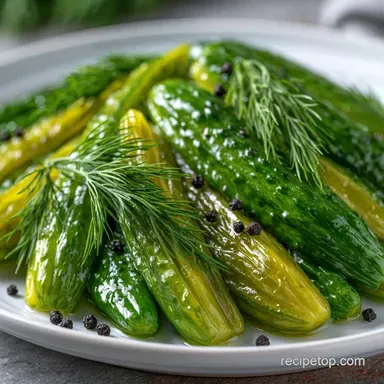
Crunchy Kosher Dill Spears
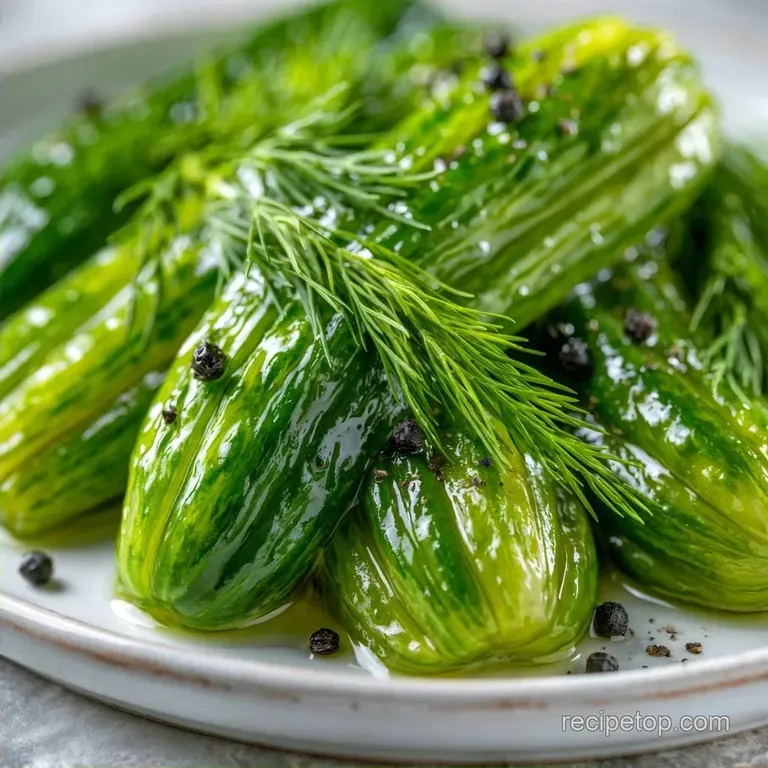
- Prep/Wait: 15 min active work + 24 hours in the fridge
- Flavor/Texture Hook: Garlic-forward, briny, and an incredible snap
- Perfect for: Low-calorie salty snacks or topping a sandwich
If you've ever stepped into a classic New York Jewish deli, you know the signature scent. It's that piercing, aromatic blend of garlic, dill, and vinegar that hits you immediately.
These pickles are far more than a side; they are a cultural icon, perfect for refreshing the palate between rich bites of salty brisket or fatty pastrami.
For many of us, this is the taste of a great city lunch or a childhood favorite. The goal of making these Kosher Dill Spears at home is to capture that authentic deli equilibrium bold saltiness balanced by an even bolder crunch.
We are using a refrigerator method here, meaning there's no need to stress over water bath canning. Provided you don't skip the resting period, you'll get a crisp, high-quality result that tastes like it was bought from a specialty shop.
Why the Brine Works
Hot Brine: Pouring the liquid while hot helps the salt and vinegar penetrate the cucumber skin quickly.
Rapid Chilling: Moving the jars to the fridge after 30 minutes stops the cooking process and preserves the cell walls for a better snap.
Filtered Water: Using filtered water prevents chlorine or minerals from reacting with the brine, which keeps the liquid clear.
Recipe Specs
Precise measurements are essential for success. This isn't a recipe where you can eyeball the ingredients; the specific ratio of salt to vinegar is what ensures your pickles remain crisp rather than turning mushy.
| Metric | Precision Target |
|---|---|
| Cucumber Mass | 1.5 lbs |
| Brine Temp | Gentle Simmer |
| Minimum Cure | 24 hours |
| Headspace | 0.5 inches |
Now, let's compare this approach with the traditional technique.
| Feature | Refrigerator Method | Traditional Fermentation |
|---|---|---|
| Time | 24 hours | 2-4 weeks |
| Flavor | Sharp and vinegary | Tangy and complex |
| Texture | Very crisp | Slightly softer |
The Right Ingredients
Kirby cucumbers are the ideal choice for this recipe. USDA FoodData indicates these are superior because they possess a denser flesh and thicker skin than standard slicing cucumbers. If you use an English cucumber, your pickles will likely be softer; Persian cucumbers are a great alternative if Kirbys are unavailable.
The vinegar ensures the necessary acidity for preservation and that characteristic tang. I prefer distilled white vinegar because it is neutral and won't discolor the spears. Kosher salt is a requirement here, as table salt contains iodine and other additives that can cloud the brine or create a metallic aftertaste.
A small amount of sugar is used to balance the vinegar's harshness without making the result sweet. Fresh dill is essential for the recipe's soul avoid using dried versions.
Ingredients & Substitutes
- 1.5 lbs Kirby or Persian cucumbers, sliced into spears Why this? Thicker skin provides a better snap (Sub: Persian cucumbers)
- 4 cloves garlic, smashed Why this? Crushing the cloves releases more oils (Sub: 1 tsp garlic powder)
- 4 sprigs fresh dill, stems included Why this? Stems are full of flavor (Sub: 1 tbsp dried dill)
- 1 tsp black peppercorns Why this? Gives a subtle woody warmth (Sub: White peppercorns)
- 1 cup distilled white vinegar Why this? Clean, sharp acidity (Sub: Apple cider vinegar)
- 1 cup filtered water Why this? Stops mineral cloudiness (Sub: Bottled spring water)
- 2 tbsp kosher salt Why this? Pure salt without additives (Sub: Sea salt)
- 1 tsp granulated sugar Why this? Balances the acid (Sub: Honey or maple syrup)
Essential Kitchen Tools
While you don't need specialized equipment, having the right gear on hand simplifies the process.
- Wide mouth Mason Jars (16 oz): Two are typically used. The wider opening allows you to pack the spears firmly without damaging them.
- Stainless Steel Saucepan: Choose a non-reactive pan. Skip aluminum or cast iron, as vinegar can cause metals to leach into the brine.
- Sharp Chef's Knife: Precise cuts ensure that the brine penetrates the spears uniformly.
- Measuring Cups and Spoons: Accurate measurements are vital for getting the salt ratio correct.
Cooking the Spears
Let's dive in. Making Kosher Dill Spears is mainly about the prep work and having the patience to wait.
- Rinse the cucumbers thoroughly with cold water. Slice each one lengthwise into quarters to form spears.
- Divide the crushed garlic, fresh dill sprigs, and peppercorns equally between two 16 oz wide mouth glass mason jars.
- Pack the cucumber spears tightly into the jars, standing them vertically to keep them snug. Note: If they float, they don't pickle evenly.
- In a saucepan over medium heat, combine the distilled white vinegar, filtered water, kosher salt, and sugar.
- Stir every so often until the crystals have melted and the mixture starts to simmer. Wait until you see small bubbles breaking the surface.
- Slowly pour the heated brine over the cucumbers, leaving a 1/2 inch gap at the top.
- Lightly knock the jars on the counter to clear out any air pockets. Tighten the lids and let them rest at room temperature for 30 minutes.
- Move the jars to the refrigerator. Let them cure for at least 24 hours before tasting.
Pro Tip: If you're in a hurry, you can eat them after 12 hours, but they reach peak flavor after a full day in the cold. Trust me on this.
Solving Common Issues
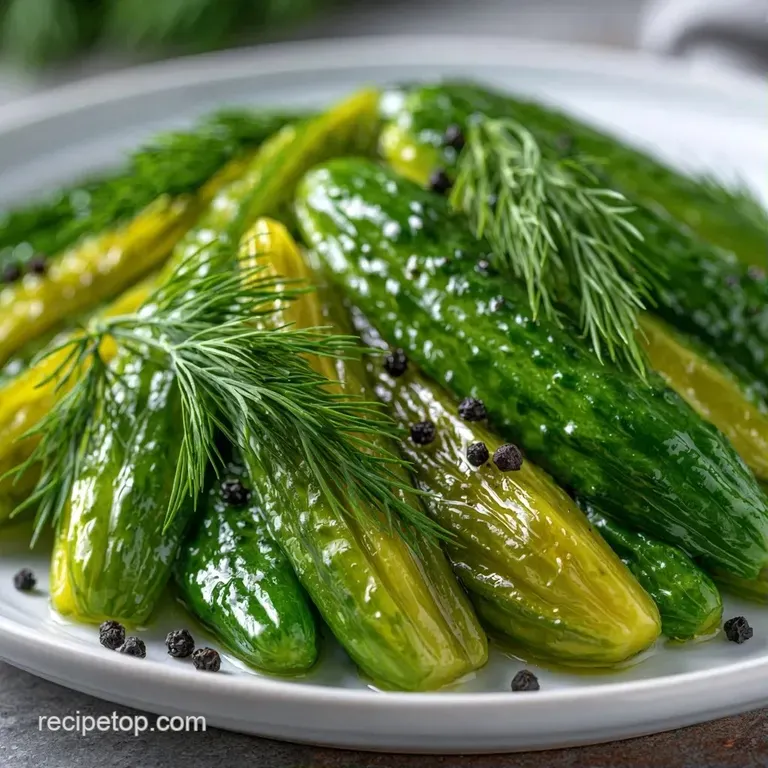
Even when following instructions exactly, unexpected issues can arise. Often, this is due to the type of cucumber used or the brine's temperature. If these spears aren't quite right, you might enjoy these Garlic Dill Pickles for a different taste.
Fixing Soft Texture
Mushy results typically occur if the cucumbers are too hot when the brine is added, or if you chose salad style cucumbers. Because slicing varieties have thinner skins and higher water content, they tend to break down under the heat of the liquid.
Clearing Cloudy Brine
A cloudy appearance is generally a result of the water or salt choice. The iodine found in standard table salt often reacts with vinegar to create a precipitate. Switching to distilled water and pure kosher salt typically solves this issue.
Reducing Salt Levels
If the flavor is too salty, you can't alter the brine once it's already in the jar. A simple workaround is to rinse each spear under cold water before eating to wash away excess salt.
| Problem | Fix |
|---|---|
| Soft/Mushy Spears | Use Kirby cucumbers and chill immediately |
| Cloudy Liquid | Use kosher salt instead of table salt |
| Overly Salty | Rinse spears before serving |
Best Pairing Ideas
These aren't just for snacking straight out of the jar. Because of their acidity, they work as a foil to rich, fatty foods.
For a classic deli vibe, pair them with a Reuben sandwich or a hot pastrami on rye. The vinegar cuts right through the melted Swiss cheese and marbled meat. They're also great on a charcuterie board next to a sharp cheddar or a creamy brie.
If you're feeling adventurous, chop them up and fold them into a potato salad. The crunch adds a great contrast to the soft potatoes, and the brine acts as a built in seasoning.
Storage and Scraps
Keep your jars in the refrigerator. They'll stay crisp and tasty for up to 4 weeks. Just make sure you use a clean fork to pull them out so you don't introduce bacteria into the brine.
Don't throw away the leftover liquid. That brine is basically a pre made marinade. Use it to soak chicken breasts for 2 hours before grilling, or splash a bit into a potato salad dressing for an instant flavor boost.
If you have leftover cucumber ends that were too small for spears, toss them in the jar as "chips" for a quick snack.
Fun Flavor Twists
After mastering the basics, feel free to experiment with the aromatics. For a quicker option, my 20 minute pickles are perfect for satisfying cravings fast.
For a Spicy Kick
Toss in two sliced jalapeños or a teaspoon of red pepper flakes per jar. The heat complements the garlic and dill perfectly.
For a Sweet and Salty Twist
Increase the sugar to 1 tablespoon. This creates a savory "bread and butter" hybrid with a softer flavor profile.
For a Low Sodium Option
Cut the salt down to 1 tablespoon and add a splash of lemon juice. Note that this reduces the shelf life, so eat them within 2 weeks.
For Easy Kosher Dill Spears for Canning
To make these pantry stable, process the jars in a boiling water bath for 10 minutes. Use a canning specific lid and ensure the brine is boiling as you pour.
For another take on the classic, you could try a Dill Pickle Recipe that utilizes a different vinegar ratio.
Decision Shortcut
- For extra snap: Refrigerate the jars immediately after the 30 minute room temp rest.
- For more garlic: Use 6 smashed cloves and let the brine steep for 10 minutes before pouring.
- For less salt: Decrease kosher salt by 25% and add a pinch of citric acid.
Adjusting the Batch Size
If you're making a huge batch for a party, don't just multiply everything linearly.
Scaling Down (½ batch): Use a smaller saucepan to prevent the brine from evaporating too quickly. Use 1 small jar and half of each ingredient. If the recipe calls for 1 egg (not here, but for other bakes), beat it and use half.
Scaling Up (2x-4x batch): Increase the salt and spices to 1.5x instead of 2x. For some reason, the flavor of the garlic and peppercorns intensifies in larger volumes. Reduce the total liquid by about 10% so you don't end up with too much waste.
Work in batches with your jars to ensure the spears stay packed tightly.
Honestly, making your own Kosher Dill Spears is one of those things that feels fancy but is actually incredibly simple. Once you taste the difference between these and the store-bought ones, you'll never go back to the plastic tubs. Right then, get your jars ready and start slicing.
Very High in Sodium
1743 mg 1743 mg of sodium per serving (76% 76% of daily value)
The American Heart Association recommends a daily sodium limit of no more than 2,300 mg, and ideally closer to 1,500 mg for most adults to reduce cardiovascular risk.
Tips to Reduce Sodium in Your Pickles
-
Slash the Kosher Salt-30%
Reduce the kosher salt by half. Because these are quick pickles rather than fermented ones, you can significantly lower the salt while still maintaining a savory flavor.
-
Increase Acidic Punch-20%
Substitute a portion of the salt with an extra splash of distilled white vinegar or lemon juice to provide the 'zing' that replaces the missing sodium.
-
Extend Marinating Time-15%
Use less salt but let the cucumbers marinate in the refrigerator for a longer period (24-48 hours) to allow the flavors to penetrate the vegetable more deeply.
-
Amplify Fresh Aromatics
Increase the amount of fresh dill and smashed garlic, or add mustard seeds, to create a complex flavor profile that distracts from the lower salt content.
Recipe FAQs
Is it true that "kosher" always means religious certification?
Actually, no. In the pickle world, "kosher" usually describes a specific style of heavily salted brine rather than a religious certification.
What's the difference between zesty and kosher dill spears?
Zesty spears contain extra heat. These variations typically add pungent spices to the standard garlic and dill base for a sharper flavor.
How to transform these spears into relish?
Pulse the spears in a food processor. Chop them into fine bits and stir in a pinch of sugar to balance the acidity.
How is a pickle made?
Submerge sliced cucumbers in a brine. Heat distilled white vinegar, filtered water, kosher salt, and sugar, then pour the hot liquid over the vegetables to preserve them.
What method makes the best homemade pickle juice?
Simmer filtered water and distilled white vinegar. Stir in kosher salt and sugar until dissolved to create a salty, acidic base.
Which cucumber variety works best for spears?
Use Kirby or Persian cucumbers. Their firm texture and thicker skins prevent the spears from becoming soft during the curing process.
Where to use fresh dill beyond pickling?
Fold it into creamy dips or potato salads. It also pairs well with seafood or can be used in a quick homemade pickle variation.
Are Polish dills different from kosher dills?
Polish dills are usually fermented. They rely on a salt and-water brine to create lactic acid, whereas kosher style spears typically use vinegar for a faster cure.
Crunchy Kosher Dill Spears