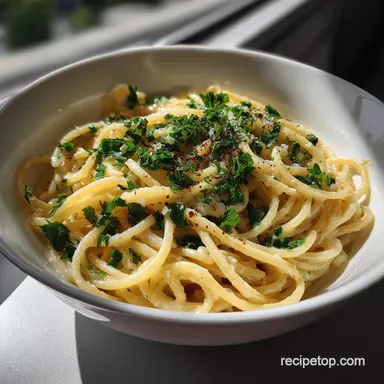
Quick Creamy Garlic Butter Pasta Recipe: 15 Minutes

- Time: 5 minutes prep and 10 minutes cook time
- Profile: Rich, garlicky, and velvety
- Perfect for: Hectic weeknights or novice cooks
- Quick Creamy Garlic Butter Pasta Recipe
- Fast Stats for Dinner
- Why the Sauce Clings
- The Pantry Basics
- Essential Kitchen Tools
- Step by Step Cooking
- The Trick Behind the Texture
- Fixing Common Issues
- Ways to Change It
- Saving and Reheating
- What Pairs Best
- Common Kitchen Myths
- Very High in Sodium
- Recipe FAQs
- 📝 Recipe Card
Quick Creamy Garlic Butter Pasta Recipe
Ever made a quick pasta only to find dry noodles swimming in a pool of yellow grease? It's a common frustration. This usually happens when the butter and cheese fail to emulsify, leaving you with a dish that feels disjointed.
This approach solves that. By incorporating a bit of the starchy pasta water, we create a bond between the fat and the noodles. It transforms a basic butter toss into a smooth sauce that actually clings to the pasta.
Enjoy a dish that tastes like it took an hour to prepare, but only takes 15 minutes. It's an affordable win that uses basic pantry staples to pack a powerful punch of flavor.
Fast Stats for Dinner
This dish moves quickly. Since the sauce builds in the time it takes to boil the water, you aren't waiting around.
| Feature | Fast Version | Classic Cream Sauce |
|---|---|---|
| Total Time | 15 minutes | 30-45 minutes |
| Base | Butter and Cream | Flour based Roux |
| Texture | Light and glossy | Heavy and thick |
| Best For | Weeknights | Sunday dinner |
Why the Sauce Clings
Starch Power: The reserved pasta water contains starch that acts as an emulsifier. This prevents the butter from separating and helps the cheese melt into the liquid.
Low Heat: Keeping the pan at medium low prevents the garlic from browning. This keeps the flavor mellow and sweet instead of bitter.
The Pantry Basics
I like to keep these on hand because they make a decent meal out of almost nothing.
| Component | Purpose | Substitute Notes |
|---|---|---|
| Unsalted Butter | Fat base for flavor | Salted butter: Reduce added salt by 1/4 tsp |
| Parmesan Cheese | Salt and thickness | Pecorino: Saltier and sharper taste |
| Heavy Cream | Richness and body | Half and Half: Thinner sauce, less rich |
| Garlic | Aromatic punch | Garlic powder: Use 1 tsp, add during cream step |
The Main Ingredients
- 8 oz (225g) fettuccine or spaghetti Why this? Flat or long noodles hold the sauce better
- 1 tbsp (15g) salt (for boiling water)
- 4 tbsp (57g) unsalted butter
- 4 cloves garlic, minced
- 1/2 cup (50g) freshly grated parmesan cheese Why this? Pre shredded has cellulose and won't melt well
- 1/4 cup (60ml) heavy cream
- 1/2 tsp (3g) cracked black pepper
- 1/4 tsp (1.5g) salt
- 2 tbsp (30ml) fresh parsley, chopped
Essential Kitchen Tools
No special equipment is necessary. A standard pot and a wide pan are all you need.
- Large pot (for pasta)
- Large skillet (for the sauce)
- Tongs (more effective for tossing than a fork)
- Microplane or fine grater (for the cheese)
Step by step Cooking
Let's jump in. The secret is timing the pasta so it finishes exactly when the garlic butter is ready.
- Get a big pot of salted water boiling. Cook the pasta as directed on the package, but stop 1 minute early to keep it al dente.
- Scoop out 1/2 cup (120ml) of the starchy pasta water. Note: Do this before draining the pot.
- Set a large skillet over medium low heat. Melt the butter until it starts to foam.
- Sauté the minced garlic for 1–2 minutes until translucent and fragrant.

- Stir in the heavy cream and black pepper, letting it simmer for 30 seconds.
- Using tongs, move the cooked pasta directly from the pot into the skillet.

- Turn the heat to low and sprinkle in the parmesan cheese.
- Vigorously toss the pasta. Incorporate the reserved pasta water in small amounts until the cheese melts and the sauce is glossy.

- Garnish with fresh parsley and serve immediately.
The Trick Behind the Texture
This Quick Creamy Garlic Butter Pasta Recipe works because of a few simple physics rules. When you toss the pasta in the pan, the agitation combines the fat from the butter and cream with the starch in the water.
If you just dumped cheese into a dry pan, it would clump. The water thins the cheese just enough to let it coat the noodles without breaking. This is how you get that restaurant feel without the heavy roux.
Fixing Common Issues
Even basic meals can go wrong due to poor timing or excessive heat. Here is how to fix common issues.
Sauce too thick or dry
If the pasta appears matte or begins to clump, you haven't used enough pasta water. Stir in another splash of the reserved liquid or a small knob of butter. This relaxes the emulsion and restores the shine.
Cheese became a clump
This occurs when the pan overheats, causing the cheese proteins to tighten and split from the fat. If this happens, take the pan off the stove immediately and whisk in a tablespoon of warm pasta water to try to smooth the sauce.
Garlic tastes burnt
Once garlic turns dark brown, it becomes bitter, and there is no way to reverse it. Your best option is to wipe the pan clean and restart the butter and garlic step. To prevent this, keep the temperature low and stay attentive to the stove.
Ways to Change It
This pasta recipe is wonderful because it is so versatile and easy to customize.
- For a zesty touch: Stir in a bit of lemon zest and a squeeze of lemon juice at the very end.
- For some heat: Add a pinch of red pepper flakes while sautéing the garlic.
- For a lighter meal: Replace the heavy cream with a teaspoon of Greek yogurt and a bit more pasta water.
- For a gluten-free option: Use chickpea or brown rice pasta. Note that these release more starch, so you may need less reserved water.
If you're looking for a protein pairing, garlic butter salmon complements these flavors beautifully.
Budget Swaps
| Original Ingredient | Budget Substitute | Impact |
|---|---|---|
| Heavy Cream | Whole Milk + 1 tsp Butter | Slightly thinner sauce |
| Fresh Parsley | Dried Parsley | Less bright, more earthy |
| Fresh Parmesan | Canned Grated | Grainier texture |
For a completely different flavor, you could try a cherry tomato sauce if you prefer something more acidic.
Saving and Reheating
Pasta with cream sauces can be tricky because the noodles soak up all the liquid while they sit.
Fridge Storage
Store leftovers in an airtight container for up to 3 days. The sauce will likely look like a thick paste once it cools. This is normal.
The Best Way to Reheat
Don't use the microwave if you can avoid it, as it can split the cream. Instead, put the pasta back in a skillet over low heat. Add a splash of milk or water to loosen the sauce back up. Stir gently until it's hot and glossy again.
Zero Waste Tips
Don't throw away the leftover parsley stems. Chop them very finely and sauté them with the garlic at the start for extra flavor. If you have a bit of leftover pasta water, use it to thicken a soup or sauce later in the week.
What Pairs Best

This dish is rich, so it needs something bright or crunchy to balance it out.
- Green vegetables: Sautéed spinach or roasted asparagus work well.
- Fresh salads: A simple Italian dressing salad cuts through the butter.
- Protein: Grilled chicken or shrimp are the classic choices here.
Decision Shortcut
- For a richer meal: Add an extra tablespoon of parmesan.
- For a fresher taste: Double the parsley and add lemon.
- For a firmer noodle: Drain the pasta 2 minutes early instead of 1.
Common Kitchen Myths
Many people think you need to rinse pasta after boiling. Don't do this. Rinsing washes away the starch we need for this Quick Creamy Garlic Butter Pasta Recipe to work.
Another myth is that you have to use a specific "pasta pot." Any pot that allows the noodles to move freely will work just fine. The most important thing is the amount of salt in the water, not the shape of the pot.
Very High in Sodium
1180 mg 1,180 mg of sodium per serving (51% 51% of daily value)
The American Heart Association recommends a daily sodium limit of no more than 2,300 mg, with an ideal limit of 1,500 mg for most adults to reduce cardiovascular risk.
Tips to Reduce Sodium
-
Slash Pasta Water Salt-30%
The 1 tbsp of salt is the primary sodium source; reduce this to 1/4 tsp or omit it entirely since the cheese provides plenty of salt.
-
Reduce Parmesan Amount-15%
Cut the amount of parmesan cheese in half or substitute a portion with nutritional yeast to maintain a savory, nutty flavor.
-
Use Acid for Flavor-10%
Add a squeeze of fresh lemon juice at the end; the acidity mimics the tongue's perception of salt, allowing you to use less.
-
Enhance with Aromatics
Increase the amount of fresh parsley and minced garlic to add more complexity and brightness to the sauce without adding sodium.
Recipe FAQs
Can I use a different pasta shape?
Use any long pasta like linguine or short shapes like penne. If you enjoyed the creamy texture here, see how a similar rich base works in our homemade mac and cheese.
How to keep the garlic from burning?
Sauté the minced garlic over medium-low heat for only 1–2 minutes. Remove it from the pan as soon as it becomes translucent and fragrant.
What should I do if the sauce is too thin?
Stir in more parmesan cheese and toss vigorously. The cheese emulsifies with the pasta water to create a thicker, velvet-like coating.
Is it true that pre-shredded cheese ruins the sauce texture?
This one's false: it still works, but freshly grated parmesan melts much smoother. Pre-shredded versions often have anti-clumping agents that hinder the gloss.
Why is the pasta water necessary?
It provides the starch needed to bind the butter and cream to the noodles. Adding it one tablespoon at a time ensures the sauce becomes glossy rather than greasy.
Does the cream need to boil for a long time to thicken?
Actually, no. Letting it simmer for just 30 seconds before adding the pasta is enough to integrate the flavors.
Creamy Garlic Butter Pasta in 15 Minutes