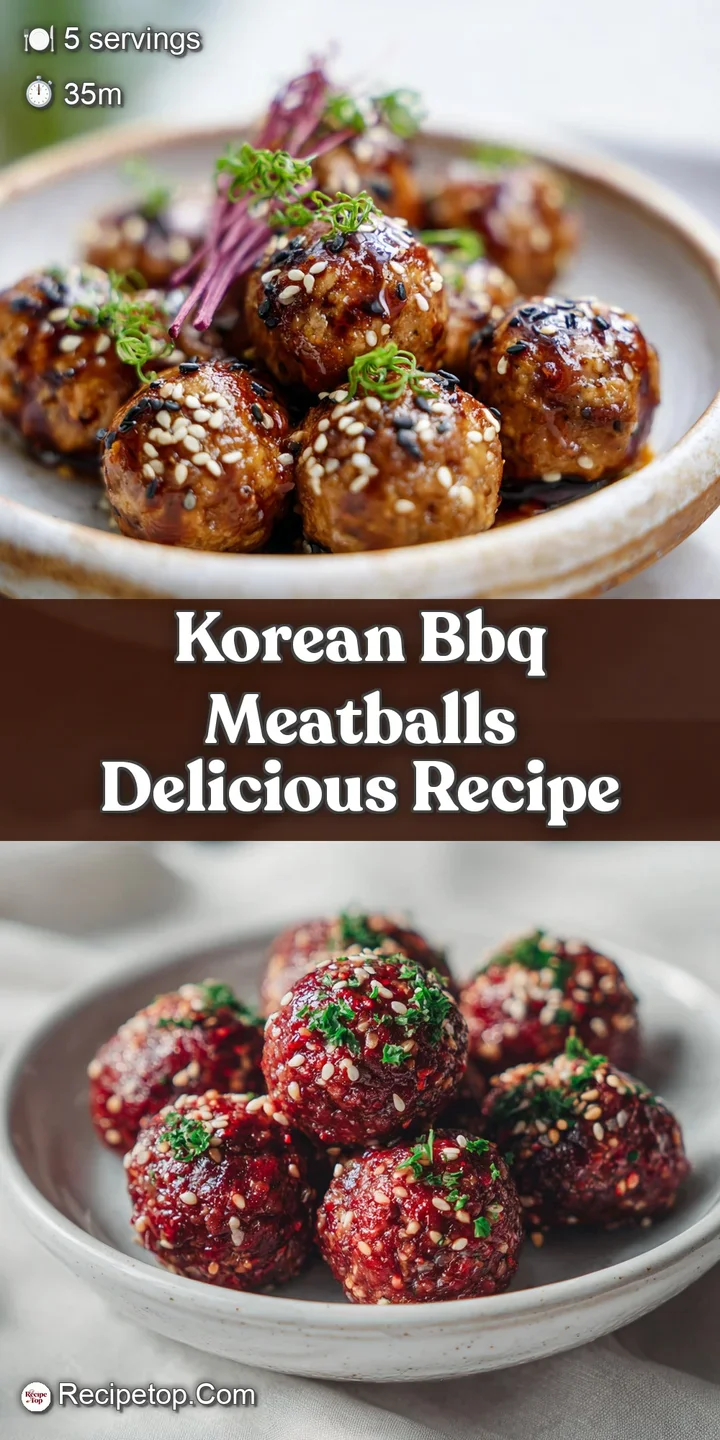
Korean Bbq Meatballs Delicious Recipe
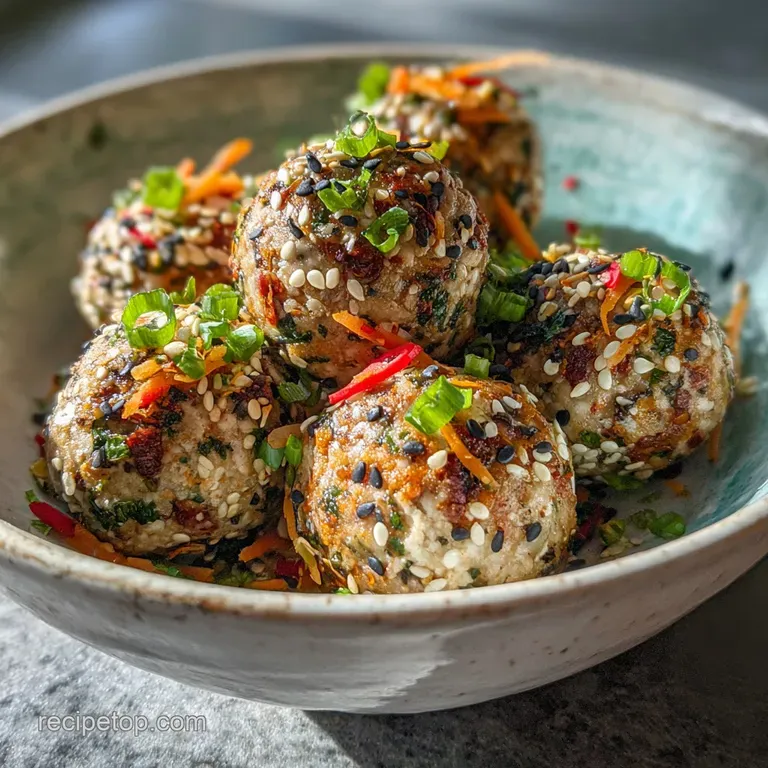
- Time: Active 20 minutes, Passive 15 minutes, Total 35 minutes
- Flavor/Texture Hook: Sticky sweet glaze with a velvety spicy mayo finish
- Perfect for: Weeknight family dinners or meal prep enthusiasts
- Create a Korean BBQ Meatballs Delicious Recipe
- Enzymatic Tenderization for Supple Results
- Component Analysis and Culinary Function
- The Essential Elements for Success
- Reliable Kitchen Tools for Efficiency
- Step by Step Glazed Mastery
- Solving Common Cooking Obstacles
- Adjusting Ratios for Any Occasion
- Debunking Popular Kitchen Tales
- Safe Storage and Smart Zero Waste Practices
- Perfect Pairings for a Complete Family Meal
- Recipe FAQs
- 📝 Recipe Card
Create a Korean BBQ Meatballs Delicious Recipe
The kitchen currently smells like a dream - a sharp, hit the-back of-your throat zing of fresh ginger mixed with the toasted, nutty aroma of sesame oil. I remember the first time I tried making these; I was so worried about using 93/7 lean beef because I thought they’d turn out like dry little hockey pucks.
But then I heard the sizzle as they hit the pan, and as that gochujang glaze started to bubble and thicken into a syrupy mahogany coating, I knew I was onto something special.
You are going to love how these come together because they solve the "boring Tuesday dinner" problem instantly. We aren’t just making meatballs; we’re creating a balance of heat, honey, and salt that feels high end but actually uses basic pantry staples.
There’s no need for fancy equipment or hours of simmering. It is all about the smart additions that keep the meat supple while the outside gets that gorgeous, slightly charred crust.
We’ve all been there with dry, crumbly meat, but this method is different. By the time you’re drizzling that velvety spicy mayo over the top, you’ll realize this is the kind of meal that makes everyone at the table go quiet for a few minutes while they just eat.
Let’s get into why this specific combination works so well and how you can nail it on your first try without any stress.
Enzymatic Tenderization for Supple Results
- Proteolysis Mechanism: Asian pear contains calpain, a natural enzyme that breaks down tough muscle fibers in beef, ensuring a tender texture even with extra lean meat.
- Maillard Reaction Control: The honey in the glaze caramelizes at 320°F, creating a complex, savory crust that provides a "shatter" effect against the soft interior.
- Emulsification Stability: Using avocado oil mayo as a base for the spicy drizzle creates a stable fat in-water emulsion that coats the tongue and tempers the gochujang heat.
- Starch Gelatinization: Panko breadcrumbs act as tiny sponges, absorbing the juices released by the meat and pear to prevent the meatballs from shrinking or becoming rubbery.
| Meatball Size | Internal Temp | Cook Time | Visual Cue |
|---|---|---|---|
| 1.5 inch (Small) | 160°F | 10-12 minutes | Deep brown, glossy exterior |
| 2 inch (Medium) | 160°F | 15-18 minutes | Sizzling juices run clear |
| 2.5 inch (Large) | 160°F | 20-22 minutes | Firm to the touch |
If you are looking for other fast ways to get dinner on the table, you might also enjoy this Ground Beef Zucchini recipe which uses similar browning techniques for maximum flavor in under half an hour. Both dishes rely on over high heat searing to lock in moisture before the final sauce is added.
Component Analysis and Culinary Function
| Ingredient | Science Role | Pro Secret |
|---|---|---|
| Asian Pear | Protein Tenderizer | Grate it into a fine pulp so it dissolves into the meat fibers. |
| Gochujang | Umami and Viscosity | This fermented paste provides body to the sauce without needing extra cornstarch. |
| Toasted Sesame Oil | Aromatic Volatiles | Add this at the very end of the mix to preserve the delicate scent. |
| Panko Breadcrumbs | Moisture Retention | These create a "tender crumb" structure by preventing the proteins from bonding too tightly. |
The secret to why this recipe is so successful lies in the pear. Most people think it's just for sweetness, but the science is in the enzymes. If you can't find an Asian pear, a Bosc pear or even a Granny Smith apple works because they share similar acidic and enzymatic profiles.
This is a trick I learned after a few failed attempts with regular meatballs that felt way too dense.
The Essential Elements for Success
- 1 lb extra lean ground beef (93/7):Why this? Keeps the dish lighter while the pear provides the necessary moisture.
- Substitute: Ground turkey or chicken (will be slightly softer).
- 1/2 cup Panko breadcrumbs:Why this? Larger surface area than standard crumbs for better juice absorption.
- Substitute: Crushed saltines or gluten-free breadcrumbs.
- 1 large egg, beaten:Why this? Acts as the structural glue to prevent meatballs from falling apart.
- Substitute: 1/4 cup plain yogurt or a "flax egg."
- 1/4 cup Asian pear, finely grated:Why this? The enzymatic "magic" that tenderizes the lean beef proteins.
- Substitute: Grated Fuji apple or Bosc pear.
- 3 cloves garlic, minced:Why this? Provides the foundational savory aromatic base.
- Substitute: 1 tsp garlic powder.
- 1 tbsp fresh ginger, grated:Why this? Adds a bright, peppery heat that cuts through the honey.
- Substitute: 1/2 tsp ground ginger.
- 2 green onions, white parts finely minced:Why this? Intense onion flavor without the moisture of a large bulb.
- Substitute: Minced shallots.
- 3 tbsp gochujang (Korean chili paste):Why this? Delivers fermented depth and a mild, lingering heat.
- Substitute: Sriracha mixed with a pinch of brown sugar.
- 2 tbsp honey:Why this? Creates the "sticky" factor and balances the fermented chili saltiness.
- Substitute: Brown sugar or maple syrup.
- 1/4 cup avocado oil mayo:Why this? High smoke point and velvety mouthfeel for the spicy drizzle.
- Substitute: Greek yogurt for a tangier, lower fat version.
Reliable Kitchen Tools for Efficiency
You don't need a professional kitchen for this, but a few specific items make it much easier. I highly recommend using a microplane for the ginger and garlic. It turns them into a paste that distributes evenly so you don't bite into a huge chunk of raw ginger.
For the meatballs themselves, a 1.5 tablespoon cookie scoop is a lifesaver. It ensures they are all the same size, which means they all finish cooking at exactly the same time.
A large cast iron skillet or a heavy bottomed non stick pan is best here. You want something that holds heat well so when the meatballs hit the pan, they sizzle immediately. If the pan is too thin, the temperature drops, and the meat will steam instead of searing.
This is the difference between a grey, boiled looking meatball and a beautiful, caramelized one.
step-by-step Glazed Mastery
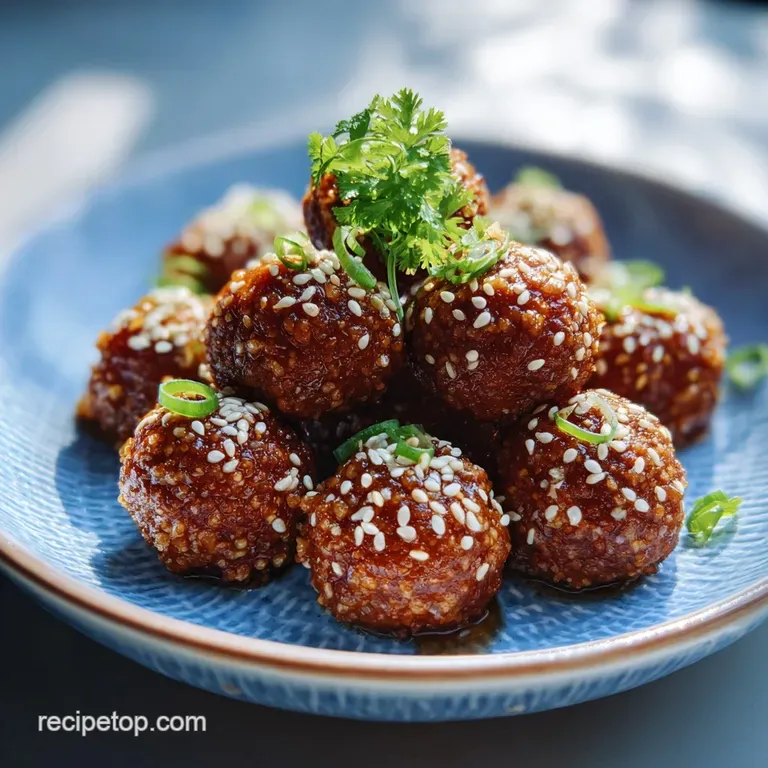
- Grate the pear. Transform the 1/4 cup Asian pear into a fine pulp using a grater. Note: Do not drain the juice; that is where the enzymes live.
- Mix the aromatics. Combine the pear pulp, minced garlic, 1 tbsp ginger, and white parts of the green onions in a large bowl.
- Incorporate the base. Add the 1 lb ground beef, 1/2 cup Panko, beaten egg, 1 tbsp soy sauce, and 1 tsp sesame oil to the bowl.
- Form the meatballs. Gently mix until just combined and roll into 1.5 inch balls. Stop as soon as the streaks of egg disappear to avoid a rubbery texture.
- Sear the exterior. Heat a splash of oil in your skillet over medium high heat and add the meatballs. Cook 5-6 minutes until they develop a dark, crispy crust on at least two sides.
- Whisk the glaze. In a small jar, combine 3 tbsp gochujang, 2 tbsp honey, 1 tbsp rice vinegar, 1 tsp ginger, and 1/4 cup water.
- Reduce the sauce. Pour the glaze over the meatballs in the skillet. Simmer for 4-5 minutes until the sauce thickens into a syrupy, bubbling coating.
- Prepare the drizzle. Whisk together 1/4 cup mayo, 1 tsp gochujang, lime juice, and garlic powder until smooth.
- Combine and finish. Toss the meatballs one last time to ensure they are fully cloaked in the mahogany glaze.
- Garnish and serve. Plate the meatballs and apply the velvety spicy mayo in a zigzag pattern.
Solving Common Cooking Obstacles
Why Your Meatballs Fall Apart
This usually happens if the mixture is too wet or if you try to flip them before the bottom has had time to "set." The egg and Panko are your binders, but they need heat to create a solid structure. If you find they are sticking, leave them alone for another minute!
Once the crust forms, they will naturally release from the pan.
Rescuing a Broken Sauce
If your glaze looks greasy or separated, it's likely because the pan was too hot and the honey started to break down. You can fix this by adding a teaspoon of water and whisking vigorously. The water helps re emulsify the sugars and fats, bringing back that glossy, smooth look we're after.
| Problem | Root Cause | Solution |
|---|---|---|
| Tough meat | Over mixing the beef | Use a fork to mix just until combined. |
| Burnt glaze | Temperature too high | Lower heat to medium before adding sugar heavy glaze. |
| Soggy exterior | Overcrowding the pan | Cook in batches to allow steam to escape. |
Common Mistakes Checklist
- ✓ Pat the meat dry before mixing to ensure the binders can work effectively.
- ✓ Ensure the pan is hot enough to hear a loud sizzle the moment the meat touches it.
- ✓ Don't skip the "resting" time for the Panko (about 5 minutes) before rolling.
- ✓ Use a gentle hand when shaping; don't pack the meat tightly like a snowball.
- ✓ Check the internal temperature with a digital thermometer to hit exactly 160°F.
Adjusting Ratios for Any Occasion
When you need to scale this recipe down for a solo dinner, it's pretty straightforward. For a half batch (approx. 2 servings), use half a pound of beef and half an egg. Since you can't easily use "half an egg," just beat the egg in a small bowl and use two tablespoons of it.
Reduce your cook time by about 20% since the smaller quantity won't crowd the pan, allowing for faster heat circulation.
If you are scaling up for a party, treat the spices carefully. Don't just quadruple the ginger and gochujang, or it might become overwhelming. I usually scale the meat and binders linearly, but I only increase the spices and salt by about 1.5x for every 2x increase in meat.
This keeps the flavor balanced without becoming too salty. Work in batches for the searing phase; if you put 40 meatballs in one pan, they will boil in their own juices rather than getting that "shatter" crust.
| Servings | Meat Quantity | Pan Size | Batch Style |
|---|---|---|---|
| 2-3 People | 1/2 lb Beef | 10 inch skillet | Single batch |
| 5 People | 1 lb Beef | 12 inch skillet | Single batch |
| 10 People | 2 lb Beef | 14 inch or two pans | Double batch |
For a smaller snack version that fits a low carb lifestyle, you could even take inspiration from this Low Carb Carnivore recipe by baking these in a mini muffin tin. It’s a great way to keep them uniform if you’re making a huge batch for a crowd and don't want to stand over the stove.
Debunking Popular Kitchen Tales
A common myth is that you must use high fat meat (like 80/20) for a "delicious" meatball. While fat does provide flavor, the addition of grated fruit and a high moisture binder like Panko proves you can get a velvety result with lean beef.
It is the cellular breakdown from the pear enzymes that provides the tenderness, not just the fat content.
Another misconception is that gochujang is "too spicy" for kids or sensitive palates. In reality, when gochujang is combined with honey and rice vinegar, the heat is significantly muted, leaving behind a rich, fermented umami flavor.
It’s more about the depth of flavor than the "burn," especially when you balance it with the cooling mayo drizzle.
Safe Storage and Smart Zero Waste Practices
Fridge and Freezer Storage You can keep these in an airtight container in the fridge for up to 4 days. They actually taste better the next day as the ginger and garlic infuse further into the meat.
To freeze, place the cooked and cooled meatballs on a baking sheet for an hour before transferring to a bag. This "flash freeze" prevents them from sticking together. They will stay fresh for up to 3 months.
Reheating and Zero Waste When reheating, do it in a pan with a splash of water and a lid. This creates steam that keeps them from drying out. If you have leftover glaze or pear pulp, don't toss it!
The pear pulp can be added to a morning smoothie for a fiber boost, and any leftover glaze makes an incredible dip for roasted broccoli or a quick stir fry sauce for tomorrow's lunch.
Perfect Pairings for a Complete Family Meal
If you're wondering what to serve with this, the classic choice is fluffy jasmine rice. The grains soak up all that extra mahogany glaze, ensuring not a single drop goes to waste. I also love serving these alongside a crisp cucumber salad with a splash of rice vinegar and sesame seeds to provide a refreshing contrast to the rich meat.
For a low carb option, these are fantastic over cauliflower rice or even tucked into large butter lettuce leaves like a wrap. The crunch of the lettuce against the soft meatball is a total winner.
If you want a more substantial side, a simple slaw made with shredded cabbage and a touch of the spicy mayo used as a dressing works perfectly.
- 1. Starch: Jasmine rice, brown rice, or rice noodles.
- 2. Freshness: Smashed cucumber salad or pickled radishes.
- 3. Crunch: Kimchi or a quick ginger soy cabbage slaw.
- 4. Toppings: Extra sliced green onions, toasted sesame seeds, or even a few cilantro leaves.
Recipe FAQs
What makes these Korean BBQ meatballs so tender?
Asian pear pulp. The natural enzymes in the pear break down tough muscle fibers, ensuring a tender texture even with lean beef. This enzymatic tenderization is key to achieving a succulent result.
Can I make the meatballs ahead of time?
Yes, up to 24 hours in advance. Roll the meatballs and store them in the refrigerator. This allows the flavors to meld further before cooking, making weeknight prep even easier.
My meatballs fell apart. What went wrong?
Likely overmixing or flipping too soon. Overworking the meat can make it tough, and flipping before the exterior has set can cause them to break. Gentle mixing and allowing a crust to form before turning are crucial.
Is it true that I must use high fat meat for good meatballs?
No, this is a common myth. While fat adds flavor, the tenderizing power of ingredients like Asian pear means you can achieve a wonderfully tender and moist meatball with extra lean beef.
How do I prevent the glaze from burning?
Reduce heat before adding the glaze. The honey in the glaze can burn quickly. Lower the skillet temperature to medium before adding it, and stir frequently as it simmers and thickens.
Can I substitute the gochujang if I don't have it?
Yes, with a mix of Sriracha and brown sugar. While gochujang offers a unique fermented depth, this substitution can mimic its sweet and spicy profile. If you're exploring different flavor profiles, you might also enjoy our Ground Beef Zucchini recipe which uses a quick pan-sear for flavor.
What is the best way to reheat leftover meatballs?
In a skillet with a splash of water and a lid. This method creates steam, which gently reheats the meatballs and keeps them from drying out. It's similar to how we aim for moisture retention in our easy 3 ingredient peanut butter cookies No-Bake by keeping ingredients from drying out.
Korean Bbq Meatballs
Ingredients:
Instructions:
Nutrition Facts:
| Calories | 322 kcal |
|---|---|
| Protein | 21.4 g |
| Fat | 14.5 g |
| Carbs | 19.4 g |
| Fiber | 1.2 g |
| Sugar | 12.8 g |
| Sodium | 435 mg |
