Thai Peanut Noodles with Lime and Sriracha

- Total20 Mins
- Calories776 kcal
- CuisineThai
- Time: 10 min active + 10 min cook (20 min total)
- Flavor & Texture: Creamy, tangy, and nutty
- Perfect for: Weeknight dinner
The smell of toasted sesame oil and garlic hits you the second the chicken hits the pan. It's that high heat sizzle that gives the protein a golden crust, contrasting with the fresh, crisp snap of raw carrots and peppers.
You don't need an hour of prep to get a meal that feels balanced. These Thai peanut noodles provide a heavy hit of protein and healthy fats, making them a great option for anyone tracking their nutrition.
Expect a sauce that clings to the noodles without feeling heavy. It's a bright, zesty dish that works just as well warm as it does chilled.
Thai Peanut Noodles Specs
This recipe is designed for speed and precision. By keeping the protein thinly sliced, you cut the cooking time down to a few minutes per side.
The ratio of peanut butter to lime juice is the key here. It ensures the richness of the nut butter doesn't overwhelm the other flavors.
Gathering Your Essentials
The quality of your peanut butter matters. I prefer a creamy, natural version with just peanuts and salt to keep the flavors clean.
What Each Ingredient Does
| Ingredient | Role | If You Don't Have It |
|---|---|---|
| Peanut Butter | Base and creaminess | Almond butter (nuttier flavor) |
| Lime Juice | Cuts the fat with acidity | Rice vinegar (less zesty) |
| Brown Rice Noodles | gluten-free structure | Wheat noodles (chewier texture) |
| Soy Sauce | Salty, savory depth | Tamari (labelled gluten-free) or Coconut Aminos |
The Pantry List
- 1/2 cup (125g) creamy natural peanut butter Why this? Provides the rich, creamy base
- 3 tbsp (45ml) reduced-sodium soy sauce
- 2 tbsp (30ml) fresh lime juice Why this? Brightens the heavy peanut flavor
- 1 tbsp (15ml) honey
- 1 tbsp (15ml) sriracha
- 1 tsp (5g) freshly grated ginger
- 2 cloves (6g) minced garlic
- 4 tbsp (60ml) warm water
- 12 oz (340g) brown rice noodles
- 1 lb (450g) chicken breast, thinly sliced Why this? Lean protein that cooks quickly
- 1 cup (150g) firm tofu, cubed
- 2 cups (220g) shredded carrots
- 1 red bell pepper, thinly sliced
- 3 stalks (45g) green onions, sliced
- 1 tbsp (15ml) sesame oil
- 1/4 cup (35g) crushed roasted peanuts
- 2 tbsp (10g) fresh cilantro, chopped
- 1 lime, cut into wedges
Equipment Needed
You only need a few basics. A medium bowl for the sauce and a large skillet for the protein do most of the work.
A large pot is necessary for the noodles to ensure they have enough room to move, which prevents them from clumping.
From Prep to Plate
Phase 1: Whisking the Sauce
In a medium bowl, combine the peanut butter, reduced-sodium soy sauce, lime juice, honey, sriracha, ginger, and garlic. Whisk until smooth, then slowly stir in warm water, adding it in one-tablespoon increments, until the sauce reaches a velvety, pourable consistency.

Phase 2: Preparing the Base
Start by boiling a large pot of water. Add the brown rice noodles and cook them according to package directions until al dente.
While the noodles simmer, use medium-high heat to warm sesame oil in a large skillet. Sear the sliced chicken breast (or cubed tofu) until golden and cooked through. For chicken, ensure it reaches a safe internal temperature of 165°F/74°C. Remove the protein from the pan and set it aside.

Phase 3: The Final Toss
Drain the noodles and rinse them briefly under cool water to remove excess starch and prevent sticking.
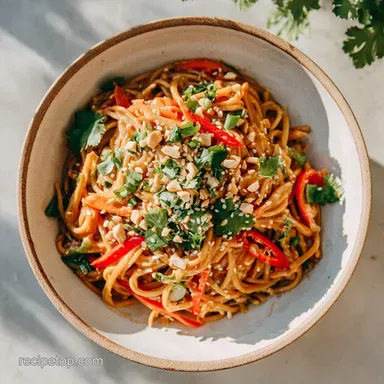
In the skillet or pot, combine the cooked noodles, seared protein, shredded carrots, and sliced red bell pepper. Pour the peanut sauce over the mixture and toss gently until every strand is evenly coated.
Divide into bowls and garnish with crushed roasted peanuts, chopped cilantro, sliced green onions, and lime wedges.

Common Problems and Fixes
If the sauce feels more like a paste than a pourable cream, you just need a bit more liquid. Peanut butter brands vary in thickness, so don't be afraid to adjust on the fly.
When noodles clump, it's usually because of the surface starch. A quick rinse under cold water stops the cooking process and clears the starch away.
If the dish tastes too salty, a squeeze of extra lime or a tiny bit more honey will balance the sodium.
Sauce and Noodle Fixes
| Problem | Fix |
|---|---|
| Sauce too thick | Whisk in 1 tbsp warm water |
| Clumping noodles | Rinse with cool water after draining |
| Too salty | Add extra lime juice or honey |
Variations and Substitutions
For a plant-based version, use the cubed tofu. It absorbs the sauce beautifully. You can also swap the honey for maple syrup to make these Thai peanut noodles entirely vegan. For a fully vegan version, also replace or leave out: chicken breast.
If you want a different noodle vibe, try this Hibachi Noodles recipe for something with a different flavor profile.
Ingredient Swaps
| Original Ingredient | Substitute | Why It Works |
|---|---|---|
| Peanut Butter | Almond Butter | Similar fat content. Note: Adds a milder, nuttier taste |
| Honey | Maple Syrup | Similar viscosity and sweetness. Note: Slightly woodier flavor |
| Brown Rice Noodles | Soba Noodles | Earthy flavor. Note: Cooks faster than rice noodles |
Make-ahead and Leftover Tips
Place the finished dish in an airtight container and keep it in the fridge for up to 4 days. Many people actually prefer these as cold Thai peanut noodles for a refreshing lunch.
The sauce will thicken in the fridge because the fats in the peanut butter solidify. To reheat, add a splash of water or a squeeze of lime to the container and microwave, stirring halfway, until the chicken reaches 165°F/74°C internally and the dish is steaming hot.
Toss them halfway through to make the sauce smooth again.
What to Serve This With

This dish is a complete meal, but a side of steamed bok choy or snap peas adds a nice crunch.
If you're hosting a dinner, pair these with some Thai Spring Rolls for a full spread. The lightness of the rolls balances the richness of the peanut sauce.
The Trick Behind the Texture
The success of these Thai peanut noodles comes down to the acid. Lime juice breaks through the heavy fats of the peanut butter, which keeps the sauce from feeling muddy on the tongue.
Before You Start Cooking
How to prepare the peanut sauce?
Whisk together the peanut butter, soy sauce, lime, honey, sriracha, ginger, and garlic. Gradually blend in warm water by the tablespoon until the consistency is silky and pourable.
Can I make these noodles with chicken?
Sliced chicken breast is an excellent option. Brown it in sesame oil until it hits 165°F/74°C internally before mixing it with the noodles.
Are these noodles good served cold?
Yes, this dish is excellent chilled. The creamy sauce holds up well, making it a refreshing option for a cold salad. You can serve it alongside these tofu rolls.
Is it possible to make this vegan?
Yes, swap the honey for maple syrup, leave out the chicken, and use cubed tofu. This keeps the flavor profile intact while ensuring all ingredients are plant-based.
Should leftovers be refrigerated?
Yes, refrigerate the dish within 1 hour. Because it contains cooked protein, it must be kept cold and only reheated once until steaming hot. When reheating cooked leftovers, check with a food thermometer that the centre reaches 165°F (74°C); the appliance temperature and time alone do not confirm this.
Thai Peanut Noodles
Ingredients:
Instructions:
You May Also Like

Thai Peanut Chicken Wrap
Master this Thai Peanut Chicken Wrap with our step-by-step timing guide.

Hibachi Noodles in 20 Minutes
Salty-sweet Hibachi Noodles with charred edges. This guide includes a detailed How to Make It…

Thai Spring Rolls
Master Thai Spring Rolls with this nutritious guide. This Thai summer rolls recipe includes a…

Tofu Spring Rolls
Tofu Spring Rolls are a fresh, plant-based delight. These Vietnamese Tofu Spring Rolls are…
