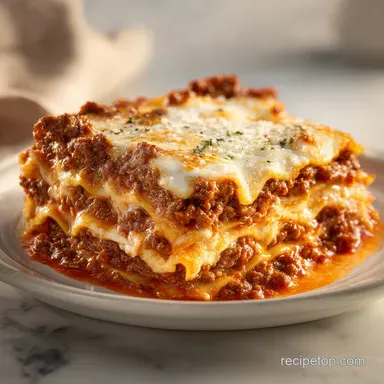
Failure-Proof Easy Beef Lasagna: Silky Ricotta
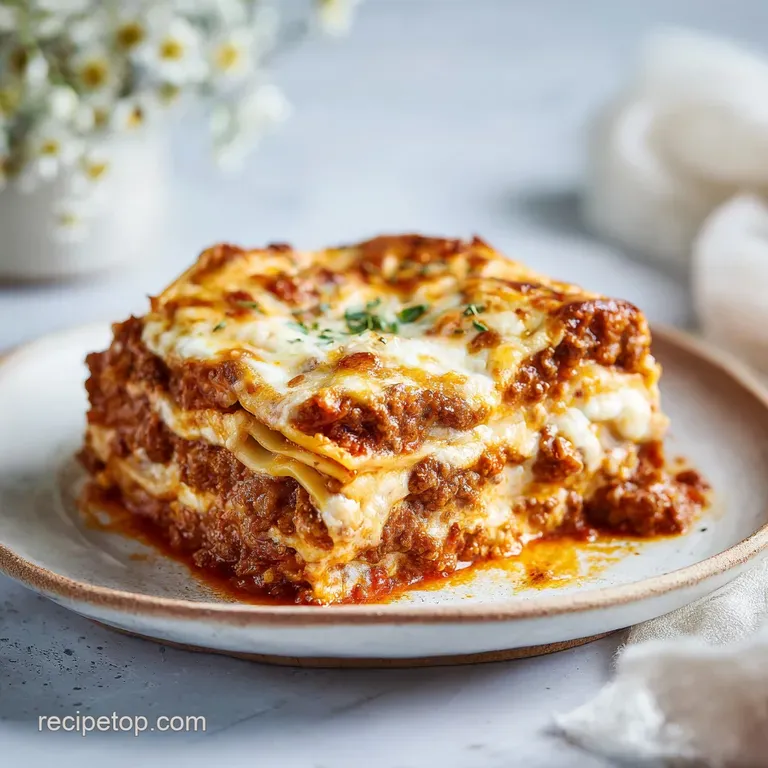
- Time: 20 min active + 45 min baking + 15 min resting = Total 1 hour 20 mins
- Flavor/Texture Hook: Shatter crisp cheese topping and silky ricotta layers
- Perfect for: Family weeknight dinners or effortless meal prep
- The Best Easy Beef Lasagna Recipe
- Recipe Details and Specs
- The Essential Ingredient List
- Gear You Will Need
- The Complete Cooking Process
- Guide to Fixing Common Issues
- Troubleshooting Common Issues
- Flavor Twists and Smart Swaps
- Storage and Leftover Tips
- Best Sides and Pairings
- Recipe FAQs
- 📝 Recipe Card
I can still smell the garlic and toasted beef from the last time I made this for my cousins. There's something about that specific aroma, the way the tomato paste caramelizes in the pan, that just screams "home" to me.
Growing up, lasagna was the heavyweight champion of Sunday dinners, usually involving a mountain of boiling pasta and a kitchen that looked like a flour bomb went off.
But honestly, the traditional way is a lot of work for a Tuesday night. I spent years thinking that if I didn't boil the noodles, the dish would be stiff or undercooked. I was wrong. Once I figured out the ratio of sauce to noodle, everything changed.
This easy beef lasagna recipe takes all the soul of a slow cooked Italian bake but cuts the stress in half. We're talking about a dish that feels fancy enough for guests but is simple enough that you won't be scrubbing pots for an hour afterward. Trust me, your future self will thank you for skipping the pasta pot.
The Best Easy Beef Lasagna Recipe
The secret to a great bake isn't actually the ingredients, it's how they interact. Most people struggle with lasagna because it ends up either too runny or like a brick. The trick is managing the moisture.
No boil noodles are a godsend here because they act like sponges, drawing liquid from the meat sauce and the ricotta to cook themselves perfectly inside the oven.
- Liquid Absorption
- No boil sheets absorb moisture from the sauce, which thickens the overall structure and prevents a "soup" at the bottom.
- Protein Binding
- The egg in the ricotta creates a custard like set, ensuring the layers stay distinct and don't slide apart when sliced.
- Fat Integration
- Searing the beef until it's dark brown creates a base of flavor that permeates the noodles during the bake.
- Steam Control
- Covering the dish with foil for the first half of the bake traps steam, which is what actually "boils" the pasta in place.
Right then, before we get into the gear, let's look at how this version stacks up against the old school method. If you're undecided, this should help you pick your path.
| Feature | This Easy Method | Classic Traditional | Impact |
|---|---|---|---|
| Noodle Prep | No boil/Dry | Pre boiled | Saves 15 mins and one pot |
| Sauce Base | Ricotta & Beef | Béchamel & Beef | Creamier, faster prep |
| Texture | Dense & Velvety | Looser & Layered | Better for slicing/freezing |
| Effort Level | Low/Medium | High | Much easier for weeknights |
But what about the common worries? I've heard people say that no boil noodles taste different. Honestly, they don't. In fact, they often taste better because they've been simmering in the sauce the entire time they're cooking. According to Serious Eats, the key is ensuring your sauce has enough moisture, which is exactly why I've balanced the crushed tomatoes and ricotta just right in this version.
Recipe Details and Specs
When you're planning your evening, timing is everything. I've broken this down so you know exactly when you'll be eating. I'm a big fan of the "plan based" flow: get your sauce simmering, prep your cheese, and then assemble.
The total time is 1 hour 20 mins, but the active work is only about 20 mins. The rest is just the oven doing the heavy lifting. This recipe yields 12 generous slices, which is plenty for a family of four to have seconds or for you to have a feast for lunch the next three days.
If you're looking for a decision shortcut to customize this on the fly, keep these in mind: - If you want a richer taste, add an extra 1/2 cup of Parmesan to the ricotta. - If you want a thinner slice, add one extra layer of noodles and sauce.
- If you prefer a softer crust, leave the foil on for an extra 5 minutes.
The Essential Ingredient List
Let's talk about what's actually going into the pan. I don't believe in fancy ingredients for the sake of it. We're using staples that you can find at any grocery store, but the quality of the tomato paste and the fat content of the beef really make a difference here.
Before we list them, let's look at why these specific components are non negotiable for a homemade beef lasagna.
| Ingredient | Science Role | Pro Secret |
|---|---|---|
| Ground Beef | Umami Base | Brown it until mahogany for deeper flavor |
| Ricotta Cheese | Moisture Barrier | Mix with egg to prevent leaking |
| No Boil Noodles | Starch Structure | Don't overlap them too much or they'll stay hard |
| Mozzarella | Maillard Crust | Use low moisture shred for better browning |
Now, here is exactly what you'll need. I've included some swaps just in case you're missing something in the pantry.
- 1 lb lean ground beef Why this? Provides structure and rich flavor without too much grease (Substitute: Ground turkey or plant based crumbles)
- 1 tbsp olive oil Why this? High smoke point for searing the beef (Substitute: Avocado oil)
- 1 medium yellow onion, diced Why this? Adds aromatic sweetness (Substitute: White onion or shallots)
- 3 cloves garlic, minced Why this? Essential pungent baseline (Substitute: 1 tsp garlic powder)
- 28 oz crushed tomatoes Why this? Provides the necessary liquid for the noodles (Substitute: Tomato purée)
- 2 tbsp tomato paste Why this? Concentrates the tomato flavor and thickens the sauce (Substitute: Extra crushed tomatoes)
- 1 tsp dried oregano Why this? Earthy, classic Italian note (Substitute: Italian seasoning blend)
- 1 tsp dried basil Why this? Sweet, peppery aroma (Substitute: Fresh basil added at the end)
- 1/2 tsp salt Why this? Enhances all other flavors (Substitute: Kosher salt)
- 1/4 tsp black pepper Why this? Subtle heat (Substitute: White pepper)
- 15 oz ricotta cheese Why this? Creamy, mild contrast to the acidic sauce (Substitute: Small curd cottage cheese, blended)
- 1 large egg, beaten Why this? Binds the ricotta so it doesn't run (Substitute: 2 tbsp cornstarch slurry)
- 1/2 cup grated Parmesan cheese Why this? Salty, nutty depth (Substitute: Pecorino Romano)
- 2 tbsp fresh parsley, chopped Why this? Freshness to cut through the fat (Substitute: Dried parsley)
- 9 oz no boil lasagna noodles Why this? Eliminates the boiling step (Substitute: Standard noodles, pre boiled)
- 4 cups shredded mozzarella cheese Why this? The classic melty, stretchy top (Substitute: Provolone mix)
Gear You Will Need
You don't need a professional kitchen for this, but a few specific tools make it go faster. First, a large skillet, something like a cast iron or a deep stainless steel pan, is best for browning the beef. You want enough surface area so the meat sears rather than steams.
For the assembly, a 9x13 inch baking dish is the standard. If you use one that's too small, the lasagna will be too tall and the middle might not cook through. I also recommend a sturdy whisk or a fork for the ricotta mixture to ensure there are no lumps.
Finally, a sharp knife and a cutting board for your onion and garlic. If you have a garlic press, use it, but chopping them fine by hand works just as well. Just make sure you have a good sheet of heavy duty aluminum foil to seal the top tightly.
The Complete Cooking Process
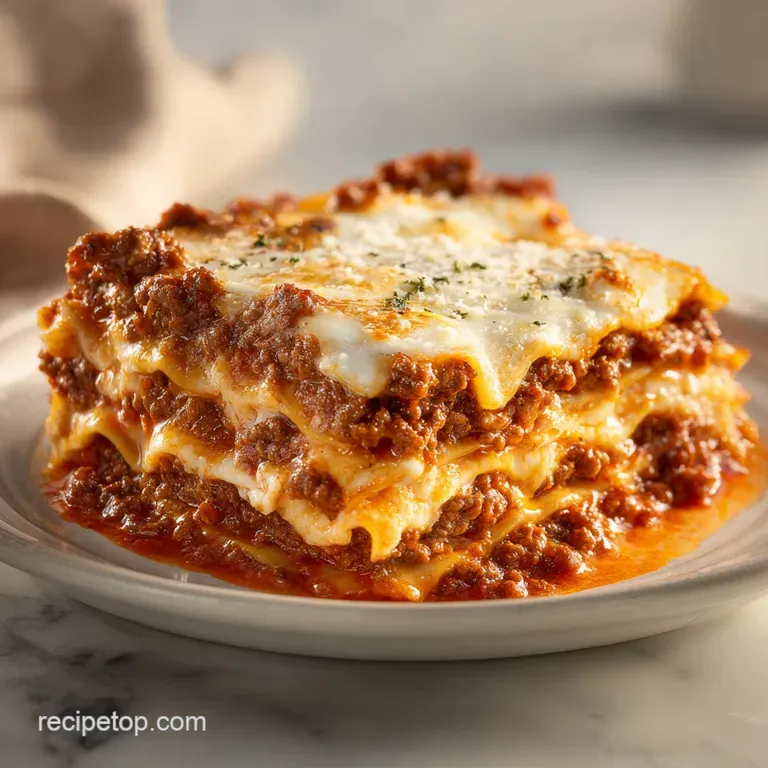
Let's crack on with the actual cooking. I've broken this down into a logical flow so you aren't rushing around the kitchen.
Searing the Beef
Heat your olive oil in the skillet over medium high heat. Add the ground beef and cook, breaking it apart with a spoon. Cook until the meat is a deep mahogany brown. This is your first checkpoint. If the meat is just grey, you're missing out on a huge amount of flavor.
Once browned, drain the excess grease so your lasagna isn't oily.
Simmering the Sauce
Stir in your diced onion and garlic. Sauté these for 3-5 minutes until they're translucent and smelling great. Stir in the tomato paste, crushed tomatoes, and those dried herbs. Now, reduce the heat to low and let it simmer for 15 minutes.
The sauce should look thick and rich, not watery.
Whisking the Cheese
While the sauce is bubbling away, grab a medium bowl. Whisk together the ricotta, the beaten egg, Parmesan, and the chopped parsley. Mix until it's completely smooth and velvety. The egg is the secret here; it transforms the ricotta from a loose cheese into a stable layer.
Layering the Masterpiece
Preheat your oven to 375°F (190°C). Now for the fun part. Spread 1 cup of your meat sauce on the bottom of the 9x13 inch dish, this prevents the bottom noodles from sticking.
Follow this order for your layers: 1. No boil noodles 2. A spread of the ricotta mixture 3. A layer of meat sauce 4. A sprinkle of mozzarella
Repeat these layers until you run out of ingredients, but always finish with a very generous topping of mozzarella cheese.
Baking to Perfection
Cover the dish tightly with aluminum foil. This is critical because the foil traps the steam that cooks the noodles. Bake at 375°F (190°C) for 25 minutes. Remove the foil and bake for another 15-20 minutes.
Wait until the cheese is bubbling and golden brown before taking it out.
The Final Rest
This is the hardest part: leave the lasagna alone for 15 minutes. If you cut into it immediately, the layers will slide, and you'll have a delicious mess on your plate. Resting allows the structure to set, ensuring you get those clean, beautiful slices.
Guide to Fixing Common Issues
Even with an easy beef lasagna recipe, things can occasionally go sideways. Usually, it's a moisture issue. If your lasagna feels "soupy," it's often because the sauce was too thin or you didn't let it rest long enough.
Troubleshooting Common Issues
| Issue | Solution |
|---|---|
| Why Your Lasagna Is Watery | This usually happens when there's too much liquid in the sauce or if the ricotta wasn't bound with an egg. It can also happen if you use "fresh" mozzarella (the kind in water) instead of low moisture |
| Why Your Noodles Are Stiff | If you find hard edges or undercooked noodles, it means they didn't have enough moisture to absorb. This happens if the sauce is too thick or if the foil wasn't sealed tightly enough to trap the steam |
| Why the Cheese Burnt | If the top is charred but the middle is cold, your oven might be running hot, or you didn't cover it with foil for the first 25 minutes. The foil protects the cheese while the interior heats up. |
Common Mistakes Checklist
- ✓ Check that the beef is mahogany brown, not grey.
- ✓ Ensure the foil is crimped tightly around the edges of the pan.
- ✓ Use low moisture mozzarella to avoid excess water.
- ✓ Never skip the 15 minute resting period.
- ✓ Make sure no boil noodles are fully covered by sauce.
Flavor Twists and Smart Swaps
If you want to change things up, this recipe is very flexible. I often add a handful of fresh spinach to the ricotta mixture, just sauté about 5 oz (140g) of spinach first, squeeze out the water, and fold it in. It's a great way to sneak in some greens without changing the flavor profile.
For a more traditional beef lasagna recipe taste, try adding 1/4 cup (60ml) of dry red wine to the beef after it's browned. Let the wine reduce by half before you add the tomatoes. This adds a depth and acidity that mimics the slow cooked sauces found in Italian restaurants.
If you're hosting a party, this lasagna pairs brilliantly as a main course alongside some Mini Blooming Onion bites as a starter to get people excited.
For those adjusting the size of the meal, here is how to scale it:
| Batch Size | Pan Adjustment | Time Adjustment | Note |
|---|---|---|---|
| Half (1/2) | 8x8 inch square | Reduce bake by 10 mins | Beat 1 egg, use only half |
| Double (2x) | Two 9x13 pans | Extend bake by 10 mins | Lower temp to 350°F (175°C) |
Keep in mind that when doubling, you don't need to double the salt and dried herbs. Use about 1.5x the spices to avoid overpowering the dish.
Storage and Leftover Tips
Lasagna is actually better the next day. The flavors have more time to meld, and the structure becomes even more stable. To store it, let it cool completely, then cover it with airtight plastic wrap or store slices in individual containers.
- Refrigeration
- It stays fresh in the fridge for 3-5 days.
- Freezing
- You can freeze a whole unbaked lasagna (skip the final bake) or sliced cooked pieces for up to 3 months. For unbaked, wrap it in foil and then a freezer bag.
- Reheating
- To keep it from drying out, add a splash of water or a teaspoon of marinara to the slice, cover it with foil, and heat at 350°F (175°C) until warm. Avoid the microwave if you want to keep that cheese crust.
Regarding zero waste, don't throw away those onion skins or carrot ends if you used them. Toss them in a freezer bag to make a homemade veggie stock later. If you have leftover ricotta, it's amazing spread on toast with a drizzle of honey and a pinch of salt.
One thing to remember about safety: according to USDA FoodData, ground beef should be cooled and refrigerated quickly to prevent bacterial growth. Don't leave your lasagna sitting on the counter for more than two hours.
Best Sides and Pairings
Since this easy beef lasagna recipe is so rich and creamy, you need something to cut through that heaviness. A crisp green salad with a sharp lemon vinaigrette is the classic choice. The acidity of the lemon cleanses the palate between bites of cheesy pasta.
If you're feeling fancy, some roasted broccolini with red pepper flakes adds a nice bit of crunch and a hint of heat. I also love serving this with a side of garlic knots or a simple piece of toasted sourdough to mop up any leftover sauce on the plate.
For a bit of a twist, if you have a guest who likes a punchy flavor, a small side of Creamy Horseradish Sauce can actually work as a dip for roasted vegetables served alongside the lasagna, providing a sharp contrast to the sweetness of the tomatoes.
Right then, you're all set. This dish is all about comfort and ease. Once you see how easy it is to get those perfect, velvety layers without boiling a single noodle, you'll never go back to the old way. Let's get cooking!
Recipe FAQs
How to make simple beef lasagne?
Brown ground beef in olive oil, sauté aromatics, and simmer with tomatoes. Layer with ricotta mixture and no-boil noodles, then bake at 375°F (190°C) for 25 minutes covered and 15-20 minutes uncovered.
What is the secret to a great lasagna?
Let the lasagna rest for 15 minutes before slicing. This ensures the layers stay stable and clean. If you enjoyed the creamy texture of the ricotta layer here, see how we achieve a similar richness in our mac and cheese.
Can heart patients eat lasagna?
Consult a doctor first. This recipe contains saturated fats from ground beef and several types of cheese, which may not fit heart-healthy dietary restrictions.
What is lazy lasagna?
A version using no-boil noodles. It eliminates the step of pre-cooking the pasta, as the noodles absorb moisture from the sauce during the baking process.
Why is my lasagna watery?
Excess moisture in the sauce. This happens if the sauce is not simmered until thick or if the ricotta was not bound with an egg.
How long does beef lasagna stay fresh in the fridge?
3 to 5 days. Keep it covered with airtight plastic wrap or store slices in individual containers to maintain quality.
Is it true that no-boil noodles must be pre-soaked?
No, this is a common misconception. These noodles are specifically designed to cook in the oven using the liquid from the meat sauce.
Easy Beef Lasagna Recipe for 12 Servings