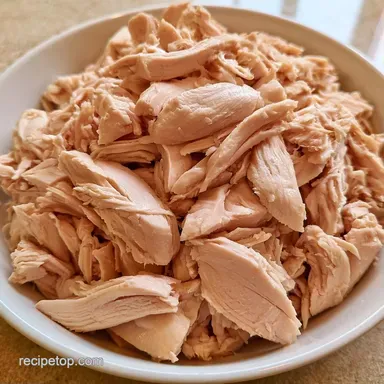
Boiled Chicken Breast with Garlic

- Time: 5 min active + 15 min cooking + 5 min resting
- Flavor & Texture: Lean, moist, and tender
- Perfect for: High-protein meal prep
Juicy Boiled Chicken Breast
The smell of bay leaf and smashed garlic fills the kitchen as the water barely bubbles. It's a clean, light scent that tells you the protein is poaching just right. You want meat that pulls apart easily without that dry, chalky feel.
This method focuses on temperature control to keep the lean meat moist. It's an efficient way to get a high volume of protein ready for the week. By keeping the heat low, making boiled chicken breast a staple for your meal prep becomes simple and stress-free.
You can use this as a base for salads, wraps, or hearty soups. It's a balanced approach to clean eating that doesn't sacrifice texture.
How the Texture Stays Tender
- Low Heat: Simmering prevents muscle fibers from contracting too violently. This helps keep the meat from becoming rubbery.
- Aromatic Liquid: Salt and garlic penetrate the meat during the poaching process. This seasons the chicken from the outside in.
What Each Ingredient Adds
- 2 (6 oz / 170 g) boneless, skinless chicken breasts
- 6 cups (1.4 L) water
- 1 tsp (6 g) salt
- 1/2 tsp (3 g) black peppercorns, whole
- 1 clove (5 g) garlic, smashed
- 1 bay leaf
For the protein, stick to boneless, skinless breasts. They cook quickly and evenly. The water acts as the medium, but the aromatics are what prevent the meat from tasting bland.
The salt is essential for flavor and moisture retention. Whole peppercorns and a bay leaf add a subtle, earthy depth that complements the natural taste of the chicken. Smashed garlic adds a pungent, savory note that wakes up the whole dish.
Tools for the Job
The equipment needed is minimal. A Dutch oven or large pot is preferred to ensure there is plenty of liquid to keep the meat fully submerged. To verify the chicken is safe to eat while avoiding overcooking, an instant-read meat thermometer is essential.
The Cooking Process
Preparing the Pot
Place the 2 chicken breasts in a single layer at the bottom of a large pot or Dutch oven. Pour in 6 cups of water, ensuring the meat is covered by at least an inch of liquid. Add 1 tsp salt, 1/2 tsp black peppercorns, 1 smashed garlic clove, and 1 bay leaf.

The Poaching Stage
Bring the liquid to a boil over medium-high heat. As soon as it reaches a boil, immediately reduce the heat to low. Cover the pot with a tight-fitting lid and simmer gently for 12 to 15 minutes. Note: the boiled chicken breast time for boneless cuts depends on thickness, so keep an eye on the clock.

Resting and Shredding
Use an instant-read meat thermometer to check the thickest part of the meat. Ensure the boiled chicken breast temp must reach 165°F (74°C) to be safe. Remove the chicken from the pot and let it rest on a plate for 5 minutes to allow juices to redistribute.
Use two forks to pull the meat apart along the grain while it is still warm to shred.

Quick Fixes
If your chicken feels rubbery, you likely kept the heat too high. The water should barely ripple, not roll. If you're cooking boiled chicken breast from frozen, it will take longer and may cook unevenly. It's better to thaw it in the fridge first.
Dealing with Rubbery Meat
When the water boils too hard, the proteins tighten and squeeze out all the moisture. Drop the heat to a low simmer the moment the water hits a boil.
Cooking from Frozen
Frozen meat can stay raw in the center while the outside overcooks. Thawing ensures a consistent texture across the whole breast.
Meat Still Pink
If the center is pink, it hasn't reached the safe temperature. Put it back in the simmering liquid for 2-3 more minutes.
| Problem | Root Cause | Solution |
|---|---|---|
| Rubbery texture | Water boiled too vigorously | Reduce heat to a low simmer |
| Dry meat | Overcooked beyond 165°F | Use a thermometer to pull meat early |
| Uneven doneness | Meat was frozen or uneven sizes | Thaw completely before poaching |
Easy Swaps and Add-Ins
For those wanting boiled chicken breast for shredding, you can swap the water for low-sodium chicken broth. This deepens the flavor significantly. If you prefer a brighter taste, add a few slices of fresh ginger or a squeeze of lemon juice to the pot.
| Original Ingredient | Substitute | Why It Works |
|---|---|---|
| Water (6 cups) | Chicken Broth (6 cups) | Adds more depth. Note: Reduce added salt |
| Garlic Clove | Garlic Powder (1/8 tsp) | Similar savory profile, though less punchy |
| Black Peppercorns | Cracked Black Pepper | Easier to strain, provides a sharper bite |
Chef: If you want the chicken to be even more tender for a salad, let it cool completely in the poaching liquid. This helps the meat absorb more moisture.
Storage and Freshness
Store the whole or shredded chicken in an airtight container; it will last 3 to 4 days in the fridge. For extended storage, freeze it in vacuum-sealed bags for up to 3 months.
When warming the meat, try to skip the microwave. Instead, heat it gently in a pan with a bit of broth until the thickest part reaches 165°F (74°C), keeping the protein from drying out.
Don't discard the poaching liquid, as it is essentially a light stock. Once strained, it makes a great start for a vegetable soup.
Serving Suggestions

This meat is incredibly flexible. I enjoy serving it cold mixed into a Italian Dressing Salad for a light midday meal.
To enjoy it warm, stir the shredded pieces into a low-fat pesto or combine them with quinoa and steamed broccoli for a nutritious, protein-packed bowl.
Common Meat Myths
Searing doesn't actually "lock in" the juices. Whether you poach or brown the meat, moisture is lost as proteins shrink. The browning process is all about enhancing flavor, not saving liquid.
Washing chicken in your sink won't eliminate bacteria; instead, it frequently spreads germs across your kitchen surfaces. The actual safety comes from the high temperature of the poaching liquid.
Sodium Content Alert
1160 mg(50% )
To support cardiovascular wellness, the American Heart Association suggests that most adults keep their daily sodium intake under 2,300 mg.
How to Lower the Sodium
-
Reduce Added Salt
Most of the sodium comes from the added salt; consider cutting this amount in half or leaving it out completely.
-
Use Citrus
Stir in some fresh lemon juice after the meat is done to add a zesty acidity that replicates the savoriness of salt.
-
Increase Aromatics
Use twice as much smashed garlic to deepen the savory taste of the broth without increasing the salt content.
-
Boost Pepper
Toss in a few more black peppercorns to give the chicken a more robust and spicy flavor profile.
-
Add Fresh Herbs
Add fresh rosemary, thyme, or parsley to the poaching liquid to introduce more natural depth and aromatic complexity.
Questions Readers Ask
How to tell if chicken breast is fully boiled?
Check the thickest part of the meat using an instant-read thermometer. It is ready to eat when the temperature is 165°F (74°C).
What are the benefits of boiled chicken?
This method provides a lean protein source that is easy to digest. You can serve it with a cherry tomato sauce for a light, healthy meal.
How long should I boil chicken tenders?
Simmer them for a shorter time than whole breasts since they are smaller. Ensure the thickest part reaches 165°F (74°C) before removing them from the pot.
What is the process for poaching a chicken breast?
Bring water and aromatics to a boil, then immediately reduce the heat to low. Cover the pot and simmer the meat gently for 12 to 15 minutes.
Where should I store leftover boiled chicken?
Keep the chicken in a sealed tub in the refrigerator for 3 to 4 days. You can also freeze it in vacuum-sealed bags for up to 3 months.
Is the boiling liquid reusable?
Yes, this liquid is essentially a light stock. Strain it and use it as a base for a vegetable soup.
Boiled Chicken Breast in 25 Minutes