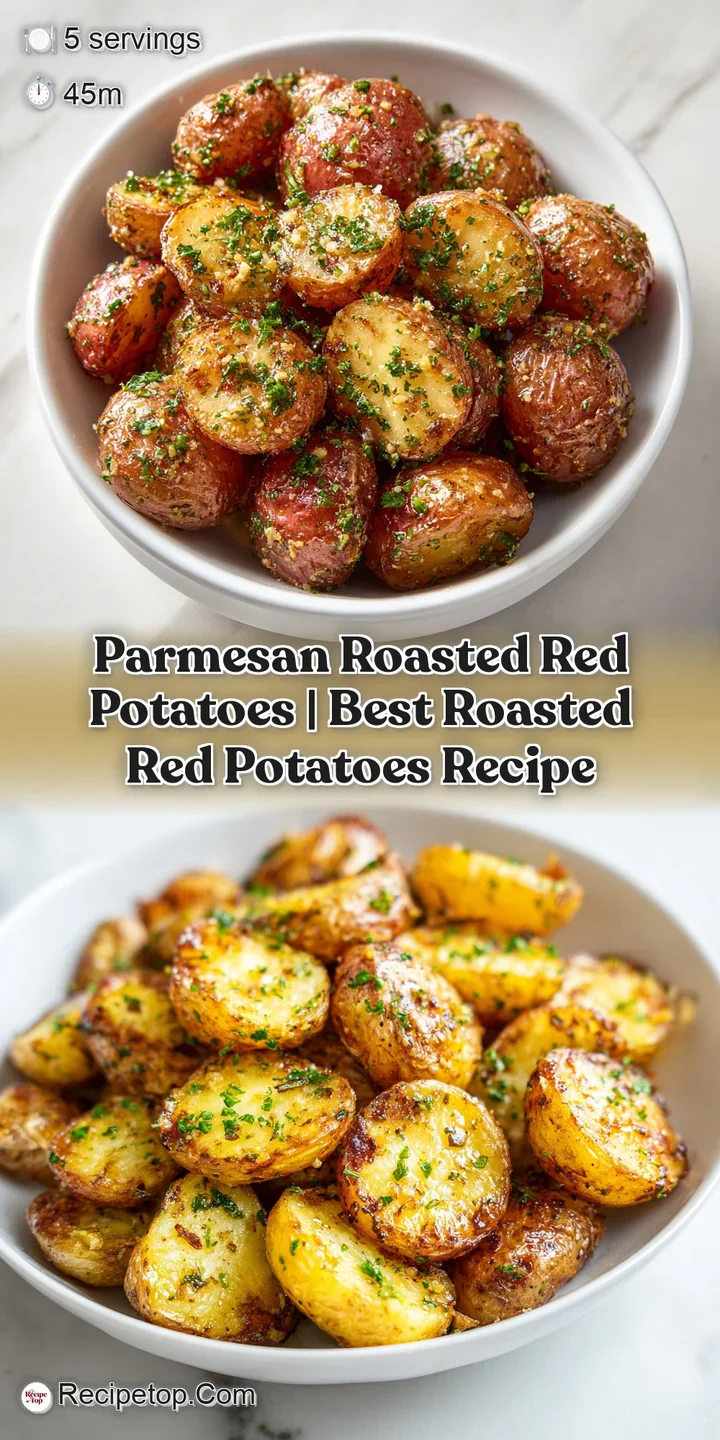
Parmesan Roasted Red Potatoes: Crispy and Savory
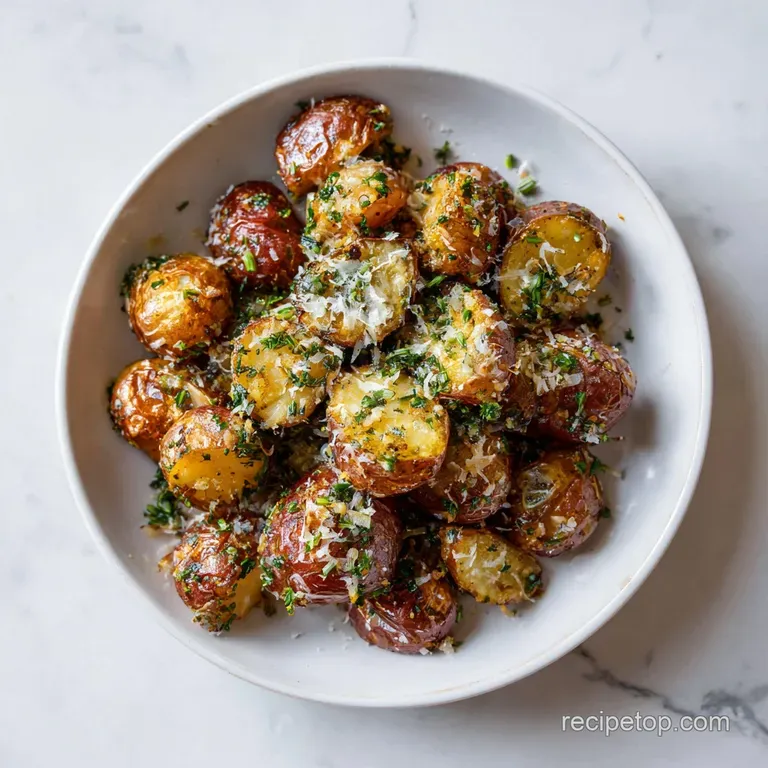
- Time: Active 15 minutes, Passive 30 minutes, Total 45 minutes
- Flavor/Texture Hook: A shatter crisp parmesan floor with a velvety, buttery potato center
- Perfect for: Busy weeknights when you need a low effort, high reward family side dish
- Create a Crispy Golden Crust with Parmesan Roasted Red Potatoes
- Why This Works and the Science of the Crunch
- Understanding the Components in Our Component Analysis
- Gathering the Simple Pantry Staples for Bold Flavor
- The Minimalist Tool Kit for Maximum Crispiness
- Mastering the Press and Roast Technique for Success
- Avoiding Common Errors for the Best Texture Possible
- Modifying the Recipe for Specific Dietary Needs
- Keeping Your Leftover Potatoes Fresh and Crunchy
- Debunking Common Roasted Potato Myths
- What to Serve with These Savory Spuds
- Recipe FAQs
- 📝 Recipe Card
Create a Crispy Golden Crust with Parmesan Roasted Red Potatoes
There is a specific sound that happens when you pull these potatoes out of the oven. It is not just a sizzle; it is a frantic, tiny crackling of cheese proteins that have finally surrendered their moisture to the heat.
The first time I tried making these, the aroma of toasted garlic and nutty parmesan hit me before I even opened the oven door. I remember looking through the glass and seeing that the butter had bubbled up around the edges of the spuds, creating these little lace like fringes of crispy cheese.
It was one of those rare kitchen moments where I knew, just by the smell, that we weren't going to have any leftovers.
You know how most roasted potatoes end up being a bit hit or-miss? Sometimes they're soggy, or the seasoning just falls off and stays on the pan. I spent way too long tossing potatoes in a bowl with oil and hoping for the best.
The real breakthrough came when I realized the pan shouldn't just be a surface for the potatoes to sit on; it should be the source of the crust itself. By turning the seasoning into a thick paste and literally planting the potatoes into it, we create a bond that doesn't break.
It’s efficient, it’s reliable, and honestly, it’s a bit of a thrill to flip them over and see that mahogany colored parmesan shell.
This version is designed for those Tuesday nights when you’re juggling three different things and need a win. We aren't doing anything fancy or using specialized equipment. We are just using the physics of a hot sheet pan and the natural starches of the red potato to get a result that feels much more sophisticated than it actually is.
It’s a family staple for us now because it’s quick, the kids actually eat the "crunchy parts," and it fits right into that 45 minute window from start to finish. Let's get into why this method actually works every single time.
Why This Works and the Science of the Crunch
- Maillard Magic: When the parmesan cheese is pressed against the 200°C pan, the amino acids and sugars react to create a complex, savory crust that tastes far better than raw cheese.
- Starch Sealing: Red potatoes are waxy, meaning they hold their shape, but when the cut surface hits the hot butter paste, the starches gelatinize and form a barrier that keeps the inside velvety while the outside fries.
- Moisture Migration: By patting the potatoes dry before roasting, we ensure the heat goes immediately into crisping rather than evaporating surface water, which is the primary cause of sogginess.
- Fat Conduction: The melted butter acts as a over high heat conductor, distributing the heat of the baking sheet evenly across the entire surface of the cheese paste for a uniform golden finish.
| Method | Time | Texture | Best For |
|---|---|---|---|
| Our Sheet Pan Press | 30 minutes | Shatter crisp crust, soft middle | Weeknight speed and maximum flavor |
| Classic Tossed Roast | 45 minutes | Chewy skin, uneven browning | Large batches for crowds |
| Air Fryer Method | 20 minutes | Very crispy but less cheese "floor" | Single servings or couples |
If you find yourself craving a different kind of potato texture for a weekend BBQ, you might actually prefer a popper roasted potato salad which leans into a creamier, tangier profile rather than this dry roast crunch. Both have their place, but for a hot dinner side, the parmesan floor is king.
Understanding the Components in Our Component Analysis
| Ingredient | Science Role | Pro Secret |
|---|---|---|
| Small Red Potatoes | Structural Base | Keep the skins on; they provide a structural "cup" that holds the soft potato inside while the bottom crisps. |
| Parmesan Cheese | Protein Binder | Use the "dust" style finely grated cheese rather than long shreds; the smaller particles create a more solid, even crust. |
| Melted Butter | Heat Conductor | Butter contains milk solids that brown alongside the cheese, adding a deep toffee like flavor note. |
| Smoked Paprika | Flavor Catalyst | This adds a "roasted over fire" depth without needing an actual grill, making the potatoes taste more complex. |
Choosing the right potato is the foundation of the whole dish. While Russets are great for mash, their high starch content can make them crumble here. Red potatoes stay firm, which is exactly what we need when we're pressing them down into the paste.
Gathering the Simple Pantry Staples for Bold Flavor
- 1.5 lbs small red potatoes, halved lengthwise: Why this? Their waxy texture holds together perfectly under the high heat of the oven. (Substitute: Baby Yukon Gold potatoes for a slightly more buttery, less firm interior).
- 3 tbsp unsalted butter, melted: Why this? Provides the fat needed to fry the cheese and carry the spice flavors. (Substitute: Ghee or clarified butter for an even higher smoke point).
- 1/2 cup finely grated parmesan cheese: Why this? The high protein and fat content create the signature savory "floor" of the dish. (Substitute: Pecorino Romano for a saltier, funkier punch).
- 1 tsp garlic powder: Why this? Distributes flavor more evenly than fresh garlic, which can burn and turn bitter. (Substitute: Granulated garlic).
- 1/2 tsp onion powder: Why this? Adds a subtle sweetness and "allium" depth that rounds out the savory notes. (Substitute: Shallot powder).
- 1/2 tsp smoked paprika: Why this? Provides a beautiful mahogany color and a hint of woodsy smoke. (Substitute: Sweet paprika if you prefer zero smoke).
- 1/2 tsp fine sea salt: Why this? Small grains dissolve quickly into the butter paste for even seasoning. (Substitute: Kosher salt, but use 3/4 tsp).
- 1/4 tsp cracked black pepper: Why this? Adds a gentle heat that cuts through the richness of the cheese. (Substitute: White pepper for a more floral, hidden heat).
- 1 tbsp fresh parsley, finely minced: Why this? The bright, grassy finish balances the heavy, salty flavors of the roast. (Substitute: Fresh chives or green onions).
The Minimalist Tool Kit for Maximum Crispiness
You don't need a kitchen full of gadgets for these Parmesan Roasted Red Potatoes. I usually just grab my trusty rimmed baking sheet the heavier the better, as thin pans can warp and cause the butter to pool in one corner. A small glass mixing bowl is all you need to whisk that flavor paste together.
I’ve found that using a silicone spatula or a small offset spatula is a total "pro move" for spreading the paste. You want it even, like you’re frosting a very flat cake. If you don't have one, the back of a large spoon works just fine. The only other "must have" is a good sharp chef's knife.
Since we're halving these lengthwise, you want a clean, flat cut. Any jagged edges will mean less contact with the pan, and less contact means less crunch. It’t that simple.
Mastering the Press and Roast Technique for Success
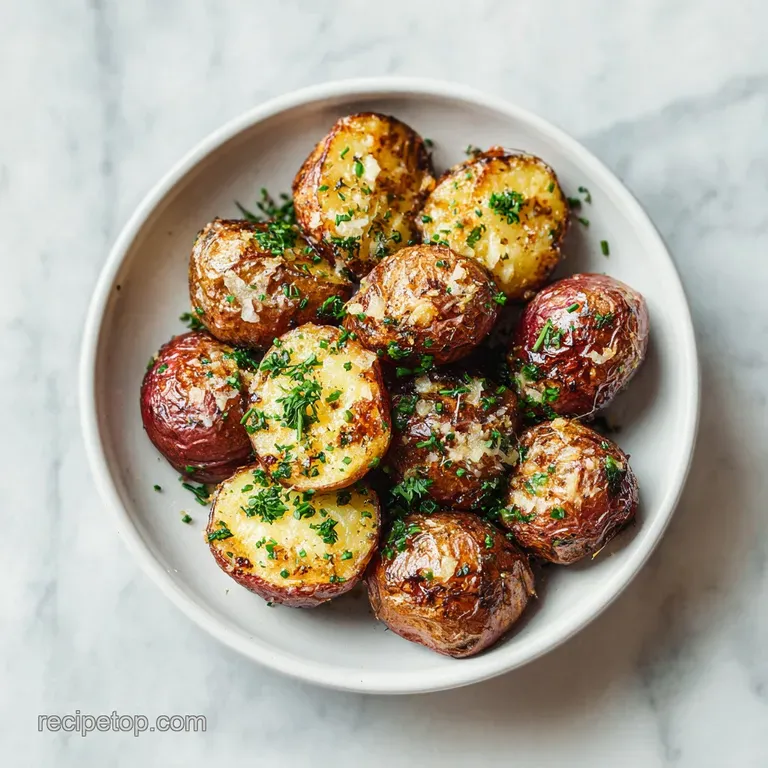
- Preheat and Prep. Set your oven to 400°F (200°C). Wash the 1.5 lbs of red potatoes thoroughly to remove any grit. Note: Pat them completely dry with paper towels; any residual water will create steam and prevent the cheese from bonding.
- Size Matters. Halve each potato lengthwise. If you encounter a few larger ones, quarter them instead. Note: The goal is to have a large, flat surface area for every piece.
- Mix the Paste. In your small bowl, whisk together the 3 tbsp melted butter, 1 tsp garlic powder, 1/2 tsp onion powder, 1/2 tsp smoked paprika, 1/2 tsp salt, and 1/4 tsp pepper. Stir in the 1/2 cup parmesan cheese until it forms a thick, gritty paste.
- Create the Floor. Spread the parmesan paste onto your large rimmed baking sheet. Aim for an even layer that matches the footprint of your potatoes.
- The Big Press. Press each potato half, cut side down, firmly into the parmesan mixture. Note: Don't just set them there; give them a little wiggle and a firm push so the paste grips the potato.
- Space Them Out. Leave about a centimeter of space between each potato. Note: Air circulation is what keeps the sides from getting mushy.
- The Roast. Place the pan in the oven and roast for 25–30 minutes until the potatoes feel tender when poked with a fork. You’ll see the cheese around the edges turning a deep, dark gold.
- The Critical Rest. This is the hardest part. Remove the pan from the oven and let it sit for 5 minutes. Note: The cheese is soft when hot; resting allows it to "set" so it sticks to the potato, not the pan.
- Release and Garnish. Use a metal spatula to lift the potatoes. They should pop right off with their cheese "crust" intact.
- Final Touch. Sprinkle with the 1 tbsp minced parsley and serve while they are still piping hot.
Avoiding Common Errors for the Best Texture Possible
Why Your Potatoes Are Sticking
If you try to lift the potatoes the second they come out of the oven, you're going to leave half the crust on the pan. I've done this more times than I care to admit. The cheese is essentially molten at 200°C.
As it cools for those five minutes, the fats solidify just enough to create a clean release. If you're still having trouble, check your pan older pans with scratched surfaces are more prone to sticking. A light spritz of non stick spray under the butter paste can be a safety net.
Why Your Crust Is Burnt But Potatoes Are Hard
This usually happens if the potatoes were too large or if your oven runs hot. If the cheese is getting dark too fast, tent the pan loosely with foil. This traps some heat to cook the potato centers while shielding the cheese from direct radiation.
Next time, try cutting the potatoes into smaller quarters to ensure the cook times sync up better.
| Problem | Root Cause | Solution |
|---|---|---|
| Soggy Crust | Excess moisture on potato surface | Pat potatoes bone dry with paper towels before pressing into paste. |
| Cheese Not Sticking | Potatoes weren't pressed hard enough | Apply firm pressure to each potato to "lock" it into the butter mixture. |
| Bitter Flavor | Garlic powder or cheese burnt | Reduce oven temp to 190°C and extend time by 5-7 mins if your oven is aggressive. |
Common Mistakes Checklist:
- ✓ Never skip the drying step; moisture is the enemy of a shatter crisp crust.
- ✓ Avoid using pre shredded cheese in a bag; it often contains potato starch or cellulose that prevents a tight bond.
- ✓ Ensure the butter is melted but not boiling hot when mixing the paste to keep the spices from clumping.
- ✓ Don't overcrowd the pan; if the potatoes are touching, they will steam each other instead of roasting.
- ✓ Always use a metal spatula for the release; plastic is too thick and might tear the delicate crust.
Modifying the Recipe for Specific Dietary Needs
Reducing the recipe for a solo dinner is easy. Just use 0.75 lbs of potatoes and keep the spice ratios the same, but use a smaller toaster oven sized pan. Because the potatoes are smaller, keep an eye on them at the 20 minute mark.
If you're scaling up for a big family Sunday roast, you'll likely need two separate baking sheets. Do not try to cram 3 lbs of potatoes onto one sheet; you'll end up with a soggy mess.
When using two sheets, rotate them halfway through the 30 minute cook time (top to bottom, front to back) to account for any hot spots in your oven.
If you are looking for a lower carb alternative that still uses that garlic heavy profile, you might want to try a garlic butter roasted cabbage instead. It uses a similar roasting logic but with a much lighter vegetable base.
For those who need to double the recipe, keep the salt and spices at about 1.5x rather than a full 2x. Spices can become overwhelming when doubled exactly, especially smoked paprika which carries a lot of "weight" in the flavor profile.
| Original | Substitute | Why It Works |
|---|---|---|
| Unsalted Butter | Extra Virgin Olive Oil | Provides a fruitier flavor. Note: Crust will be slightly less "fried" and more "baked." |
| Parmesan Cheese | Nutritional Yeast | For a vegan version. Mix with a little almond flour to get the "bulk" of the crust. |
| Red Potatoes | Yukon Gold | Higher starch content makes for a fluffier, "mashed potato" like interior. |
Keeping Your Leftover Potatoes Fresh and Crunchy
Storage: These potatoes will stay good in the fridge for up to 4 days. Put them in an airtight container once they have cooled completely. If you put them in while they are still warm, the steam will turn that beautiful crust into a sad, soggy layer of mush.
Reheating: Please, I beg you, do not use the microwave. It will ruin the texture you worked so hard for. Instead, pop them back onto a baking sheet in a 400°F (200°C) oven for about 8-10 minutes.
This will re fry the cheese floor and bring back that crunch. If you're in a rush, an air fryer at 180°C for 4-5 minutes works like a charm too.
Freezing: You can freeze these! Flash freeze them on a tray first so they don't stick together, then move them to a freezer bag. They'll last about 2 months. When you're ready to eat, don't thaw them just roast them straight from frozen at 200°C for about 15-20 minutes.
Zero Waste Tip: If you have just a few leftover potatoes that aren't enough for a full serving, chop them up and toss them into a breakfast hash the next morning. The parmesan crust adds an incredible salty depth to scrambled eggs or a morning frittata.
Debunking Common Roasted Potato Myths
One of the biggest myths I used to believe was that you had to parboil potatoes to get them crispy. While that's true for some styles, for these Parmesan Roasted Red Potatoes, it's actually counterproductive.
Parboiling adds internal moisture and softens the surface too much, making it harder for the parmesan paste to "grip" the potato. The high heat of the 200°C oven is more than enough to cook a halved small red potato all the way through in 30 minutes.
Another thing people tell you is that "oil is better than butter" for over high heat roasting. While oil has a higher smoke point, butter contains milk solids that undergo their own browning process. In this recipe, the butter isn't just a fat; it’s a flavor builder.
Because it’s mixed with the cheese and spices into a thick paste, it doesn’t burn the way plain butter might. It creates a much richer, more "restaurant style" finish than oil ever could.
What to Serve with These Savory Spuds
These potatoes are the ultimate wingman for almost any protein. I love serving them alongside a simple roast chicken or even a seared steak. Because they have that heavy, savory parmesan profile, they balance out really well with something bright or acidic.
A simple green salad with a lemon vinaigrette is usually my go to side to keep the meal feeling balanced.
If you’re looking for a starch on-starch feast (no judgment here, we’ve all had those days), these potatoes actually pair surprisingly well with a garlic parmesan rice. It carries the same flavor notes through the meal but offers a different texture profile.
If you want to go the "comfort food" route, serve these with a simple meatloaf or some grilled sausages. The smoky paprika in the potato crust acts as a bridge to the savory, smoky flavors of grilled meats.
Honestly, I’ve also been known to just eat a bowl of these on their own with a little dollop of sour cream or Greek yogurt on the side. The tanginess of the yogurt against the salty cheese crust is well, let's just say you won't be sharing.
Recipe FAQs
How to ensure the potatoes develop a crispy crust?
Wash and pat the potatoes completely dry with paper towels. Moisture is the enemy of a crispy crust, so removing all surface liquid before roasting is critical for the best texture.
Is it true I must boil the potatoes before roasting them?
No, this is a common misconception. You can achieve perfect tenderness and a deep golden crust by roasting them raw for 25 30 minutes at 400°F.
How to prevent the parmesan crust from sticking to the pan?
Allow the potatoes to rest on the pan for 5 minutes after removing them from the oven. This resting period allows the cheese proteins to firm up and release naturally from the surface of the baking sheet.
Can I prepare the potatoes ahead of time?
Yes, you can halve and submerge them in cold water for up to 12 hours. Just be sure to dry them thoroughly before applying the parmesan paste and roasting at 400°F.
How to choose the right size for uniform roasting?
Halve the potatoes lengthwise or quarter them if they are larger. Ensuring they have a large, flat surface area maximizes contact with the parmesan paste, and if you enjoyed mastering this even browning technique, you will find it translates perfectly to roasting proteins.
What is the secret to a flavorful cheese crust?
Whisk the melted butter with all spices and the cheese to form a thick paste. Spreading this mixture directly on the pan before adding the potatoes ensures the seasoning stays on the potato surface rather than burning on the bare metal.
How to know when the potatoes are done?
Pierce the potatoes with a fork to check for tenderness. They are ready once the inside is soft and the parmesan crust has reached a deep, golden brown color after 25 30 minutes of roasting.
Parmesan Roasted Red Potatoes
Ingredients:
Instructions:
Nutrition Facts:
| Calories | 199 kcal |
|---|---|
| Protein | 5.2 g |
| Fat | 9.7 g |
| Carbs | 22.5 g |
| Fiber | 2.1 g |
| Sugar | 1.4 g |
| Sodium | 385 mg |
