Homemade Peach Butter: Caramelized and Spreadable
- Time: Active 20 minutes, Passive 90 minutes, Total 110 minutes
- Flavor/Texture Hook: Jammy, bronze, and spreadable with warm spice undertones
- Perfect for: Lazy Sunday breakfasts or thoughtful homemade gifting
- Crafting Your Peach Butter Recipe Delicious Homemade Spread
- What Makes This Fruit Butter Thick
- Selecting Your Key Recipe Elements
- Gathering Your Essentials
- Essential Tools for Smooth Spreads
- Step-by-Step Cooking and Reduction Guide
- Fixing Texture and Flavor Flaws
- Adjusting Batches for Large Crowds
- Debunking Old Fruit Preserve Beliefs
- Safe Storage and Zero Waste
- Creative Ways to Enjoy Butter
- Recipe FAQs
- 📝 Recipe Card
Crafting Your Peach Butter Recipe Delicious Homemade Spread
The first time I tried making a fruit spread, I ended up with a runny, pale mess that soaked right through my toast and left a sad puddle on the plate. It was a classic beginner mistake I was so afraid of burning the fruit that I didn't let it cook long enough to actually become "butter." True fruit butter isn't just jam; it’s a reduction.
You want that water to leave the building so the flavor can actually stand up and be noticed.
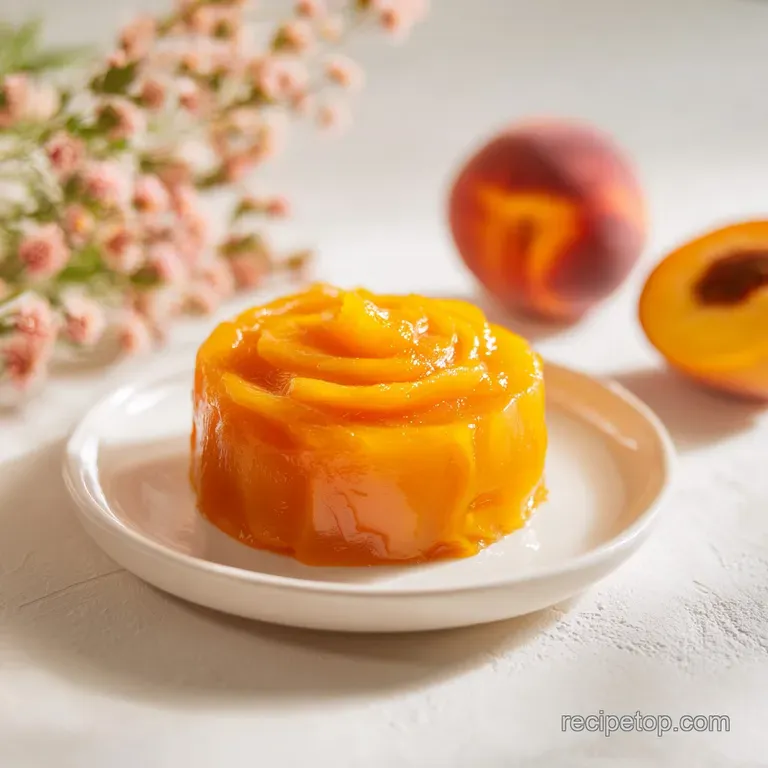
When you start simmering these 4 lbs of fresh peaches, the kitchen fills with this heavy, sweet scent that honestly rivals any expensive candle. You’ll watch the fruit go from bright orange chunks to a slumped, translucent pile, and eventually into a deep, glossy bronze.
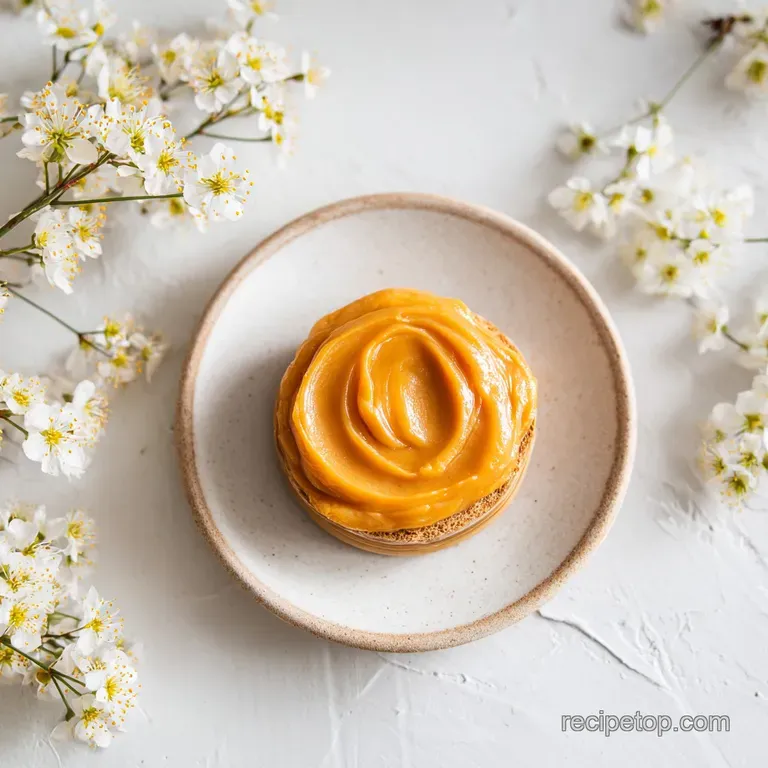
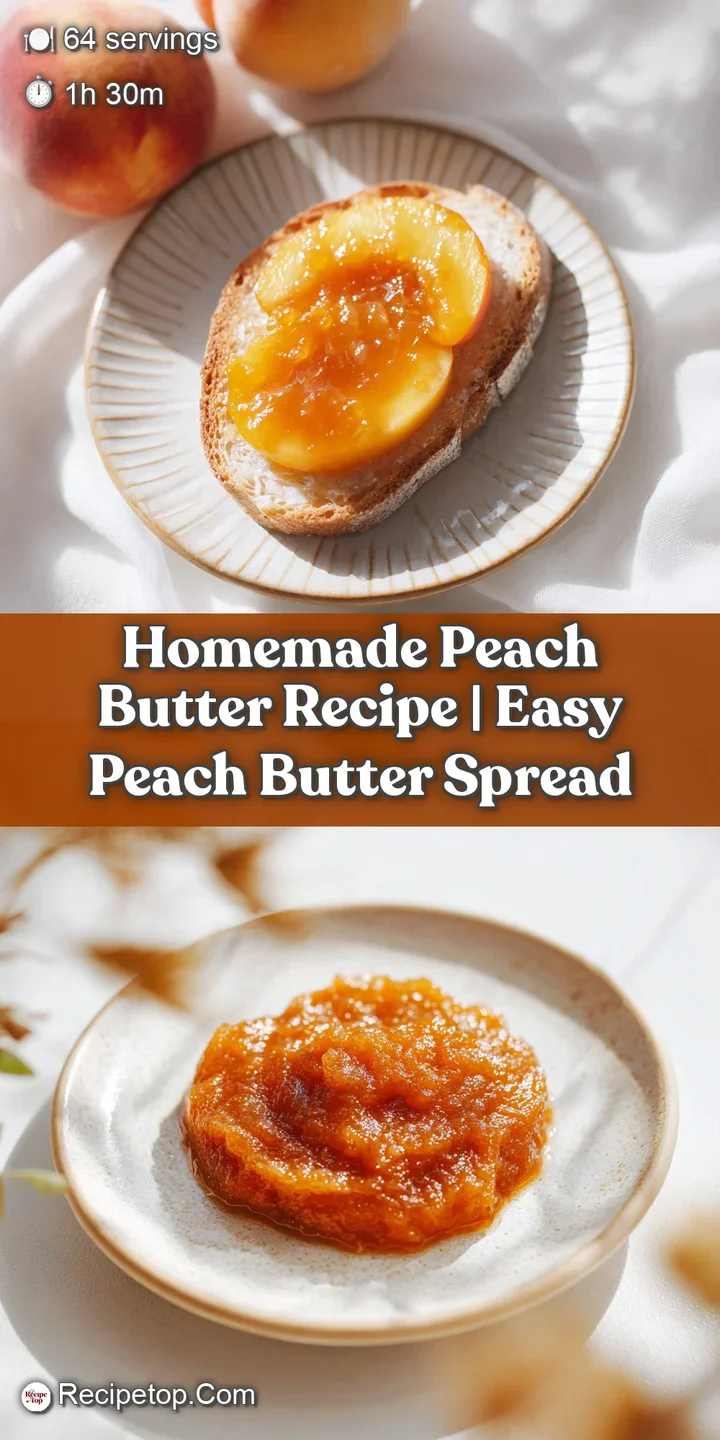
That transformation is where the magic happens. We're going for a texture that's thick enough to hold its shape on a knife but smooth enough to glide over a warm muffin without any resistance.
This recipe is your fix for those "meh" supermarket peaches or the basket of overripe ones you forgot on the counter. We’re using a heavy bottomed pot to ensure even heat and a good amount of lemon juice to keep things bright.
By the time you're done, you'll have a spread that's so much more intense than anything you can buy in a store. It’s simple, honest cooking that relies on patience rather than complicated techniques.
What Makes This Fruit Butter Thick
Evaporation Surface: Using a wide bottomed pot increases the surface area, allowing steam to escape faster and thickening the puree efficiently.
Sugar Hygroscopy: The combination of granulated and brown sugars binds to the remaining water, creating a dense, glossy structure that resists runniness.
Pectin Activation: Natural pectin in the peach skins and pulp reacts with the lemon juice’s acidity to create a soft, spreadable gel.
Maillard Reaction: Long, over low heat cooking browns the sugars and fruit solids, developing that signature deep bronze color and complex flavor profile.
| Method | Time | Texture | Best For |
|---|---|---|---|
| Stovetop | 90 minutes | Thick, glossy, and caramelized | Maximum flavor control and speed |
| Slow Cooker | 8 hours | Deeply dark but can be thinner | Set it and forget it convenience |
| Oven Roast | 2 hours | Intense, slightly roasted notes | Large batches without stirring |
Choosing the right method depends on your schedule, but the stovetop version we're doing today gives you the most vibrant result. The direct heat allows for better caramelization than a slow cooker, which often traps too much steam. If you find yourself wanting a more savory start to your day, this spread pairs surprisingly well with a toasted Garlic Butter Flatbread for a sweet and salty snack.
Selecting Your Key Recipe Elements
| Ingredient | Science Role | Pro Secret |
|---|---|---|
| Fresh Peaches | Provides fiber and natural pectin | Use "free stone" varieties for easier pitting and better texture |
| Lemon Juice | Lowers pH to help the set | Always use fresh; bottled can have a metallic aftertaste in preserves |
| Brown Sugar | Adds molasses for color depth | Pack it tightly to ensure you get the full moisture locking benefit |
Gathering Your Essentials
- 4 lbs fresh peaches: Pitted and sliced. Look for fruit that gives slightly when pressed.
- 0.5 cup water: This prevents the fruit from scorching during the initial softening phase.
- 1.5 cups granulated sugar: Provides the main sweetness and structural "set."
- 0.5 cup light brown sugar: Packed. The molasses notes give that old-fashioned vibe.
- 3 tbsp fresh lemon juice: Essential for balancing the sugars and activating pectin.
- 1.5 tsp ground cinnamon: The heavy lifter of the spice blend.
- 0.5 tsp ground ginger: Adds a subtle back of-the throat warmth.
- 0.25 tsp ground cloves: A little goes a long way for that "holiday" aroma.
- 0.25 tsp salt: Don't skip this; it makes the peach flavor pop.
For a different fruity treat, you might want to try these Raspberry Sugar Cookies which use a similar balance of tart fruit and sweet dough. If you don't have fresh peaches, you can use frozen ones just thaw them first and keep the extra juice for the pot.
Essential Tools for Smooth Spreads
You don't need a lab full of gadgets, but a heavy bottomed pot like a Dutch oven is non negotiable. Thin pots have "hot spots" that will burn your sugars before the butter is even close to being done. You'll also want an immersion blender.
Trust me, trying to pour boiling peach lava into a traditional blender is a recipe for a kitchen disaster I've personally experienced.
A wide wooden spoon or a silicone spatula is also key. You need to be able to scrape the very bottom of the pot as the mixture thickens. If you let a layer of sugar sit still for too long at the end, it will catch and turn bitter. Finally, have some sterilized jars ready.
Even if you aren't doing a full water bath canning process, clean jars ensure your hard work doesn't spoil in three days.
step-by-step Cooking and Reduction Guide
- Combine the 4 lbs of sliced peaches and 0.5 cup water in your heavy pot over medium heat.
- Cover the pot and simmer for 20 minutes. Note: This breaks down the cellular structure so they're easy to puree.
- Check the fruit; it should be slumped, translucent, and easy to smash with a spoon.
- Blend the mixture with an immersion blender until it is completely smooth.
- Stir in 1.5 cups granulated sugar, 0.5 cup light brown sugar, 3 tbsp lemon juice, spices, and salt.
- Turn the heat down to low medium and cook uncovered. Note: Leaving it uncovered is what allows the water to evaporate.
- Simmer for 60-70 minutes, stirring every 10 minutes at first, then more frequently as it thickens.
- Watch for the color shift until it reaches a deep, rich bronze.
- Perform a "sheet test" by lifting a spoonful; it should hang off the edge in a thick sheet, not drip like water.
- Ladle the hot butter into jars, leaving 1/4 inch of space at the top, and let cool completely.
Fixing Texture and Flavor Flaws
Why Your Peach Butter Is Runny
If your spread looks more like a sauce than a butter, you simply haven't evaporated enough water. This usually happens if the heat was too low or you used a very narrow, tall pot. You can fix this by putting it back on the stove.
Low and slow is the name of the game here don't try to rush it with high heat or you'll just burn the bottom.
Why Your Spread Tastes Bland
Peaches can vary wildly in acidity and sweetness. If the flavor feels "flat," it’s usually a lack of acid. A tiny extra squeeze of lemon juice can wake up the whole batch. Also, make sure you didn't skip the salt! It sounds weird for a sweet spread, but salt is a flavor magnifier.
| Problem | Root Cause | Solution |
|---|---|---|
| Grainy Texture | Sugar didn't dissolve | Add a splash of water and reheat slowly while stirring |
| Bitter Aftertaste | Scorched bottom | Do not scrape the bottom; pour the un burnt top into a new pot |
| Separation | Not enough reduction | Continue simmering uncovered to bind the fibers and sugars |
Common Mistakes Checklist
- ✓ Using underripe, crunchy peaches (they lack the natural sugars and pectin needed for a good set).
- ✓ Leaving the lid on during the second half of cooking (the water won't escape, and it'll stay runny).
- ✓ Not stirring frequently at the end (the high sugar content makes it stick and burn once it's thick).
- ✓ Skipping the immersion blender (chunky fruit butter is just jam; we want that silky, buttery mouthfeel).
- ✓ Forgetting to adjust the sugar if your peaches are exceptionally sweet or tart.
Adjusting Batches for Large Crowds
If you’re lucky enough to have a massive haul of peaches, you can easily double this recipe. Just keep in mind that a double batch takes significantly longer to reduce because there's more volume for the steam to fight through.
I'd recommend using two separate wide pots rather than one giant deep one; you'll get a better color and a faster cook time that way.
When cutting the recipe in half for a small batch, be extra careful with the spices. Spices like cloves and ginger don't always scale linearly. I’d start with a tiny pinch and taste as you go.
Also, remember that a smaller volume will reduce much faster keep a close eye on it after the 30 minute mark so it doesn't turn into peach candy.
Debunking Old Fruit Preserve Beliefs
One big myth is that you have to peel the peaches. Honestly, I never do. Once you simmer them and hit them with the immersion blender, the skins vanish into the puree. Plus, the skins hold a lot of the natural pectin and color that makes the butter so vibrant.
Save yourself the 20 minutes of tedious peeling and just leave them on.
Another misconception is that fruit butter needs to be "processed" in a canner to be good. While you do need a water bath for long term shelf storage, "refrigerator butter" is perfectly fine. As long as your jars are clean and you keep it chilled, it stays fresh for weeks.
You don't need the stress of a boiling cauldron of water if you plan on eating this within a month.
Safe Storage and Zero Waste
Store your finished peach butter in the fridge for up to 3 weeks. If you’ve made a massive amount, it freezes beautifully. I like to freeze it in small silicone molds or ice cube trays, then pop the frozen cubes into a freezer bag.
That way, you can grab just enough for a single serving of toast without thawing the whole jar. It stays good in the freezer for about 6 months.
For a zero waste approach, don't just toss those peach pits! You can simmer them with a little sugar and water to make a quick peach infused simple syrup for cocktails or iced tea. Any bruised parts of the peach that you trim off can go into the compost, or even into a quick smoothie.
Nothing has to go to waste when you're working with such a delicious homemade spread.
Creative Ways to Enjoy Butter
While toast is the classic vehicle, this butter is a secret weapon in the kitchen. Swirl a spoonful into plain Greek yogurt or oatmeal for a breakfast that feels like a treat. It’s also incredible as a filling for crepes or spread between layers of a simple vanilla cake.
The warm spices make it a natural fit for autumn, but the bright peach flavor keeps it feeling like summer.
If you’re feeling adventurous, use it as a glaze for roasted pork or chicken. The sugars will caramelize under the broiler, creating a sticky, savory sweet crust that's out of this world. You can even whisk a little bit into a vinaigrette for a fruity salad dressing.
The possibilities go way beyond just a morning snack, so don't be afraid to experiment with your batch!
Recipe FAQs
How to know when the peach butter is finished cooking?
Perform a sheet test to check the consistency. Dip a metal spoon into the pot and lift it; if the mixture drops off in a single "sheet" rather than running off like thin juice, it has reached the ideal buttery thickness.
Is it necessary to remove the peach skins before cooking?
No, this is a common misconception. Because you use an immersion blender to puree the mixture after the initial simmer, the skins break down completely and contribute to the smooth final texture.
How to achieve an ultra smooth, professional consistency?
Pass the pureed mixture through a fine mesh sieve after using your immersion blender. If you enjoyed achieving this silky mouthfeel, notice how we use similar blending techniques to ensure a perfectly smooth finish in our Eggless Cheesecake Delight.
Can I speed up the thickening process by using high heat?
No, maintain low-medium heat during the reduction phase. High heat will scorch the natural sugars and produce a bitter, burnt taste rather than the deep, concentrated flavor of a traditional fruit butter.
Why is my peach butter still runny after cooking for 70 minutes?
Check if you left the lid on during the final reduction. You must cook the mixture uncovered to allow excess water to evaporate, which is the only way to reach a thick, spreadable consistency.
How to store the finished peach butter properly?
Ladle the hot mixture into sterilized glass jars while leaving exactly 1/4 inch of headspace at the top. Ensure the lids are tightly sealed and keep them in a cool, dark place or the refrigerator for longevity.
How to prevent the bottom from burning during the long cook time?
Stir the mixture frequently during the final 60 70 minutes of cooking. Using a wide bottomed heavy pot helps distribute heat evenly and exposes more surface area, which speeds up the thickening process without requiring intense heat.
Homemade Peach Butter Spread
Ingredients:
Instructions:
Nutrition Facts:
| Calories | 35 kcal |
|---|---|
| Protein | 0.3 g |
| Fat | 0.1 g |
| Carbs | 9 g |
| Fiber | 0.4 g |
| Sugar | 8.4 g |
| Sodium | 9 mg |
