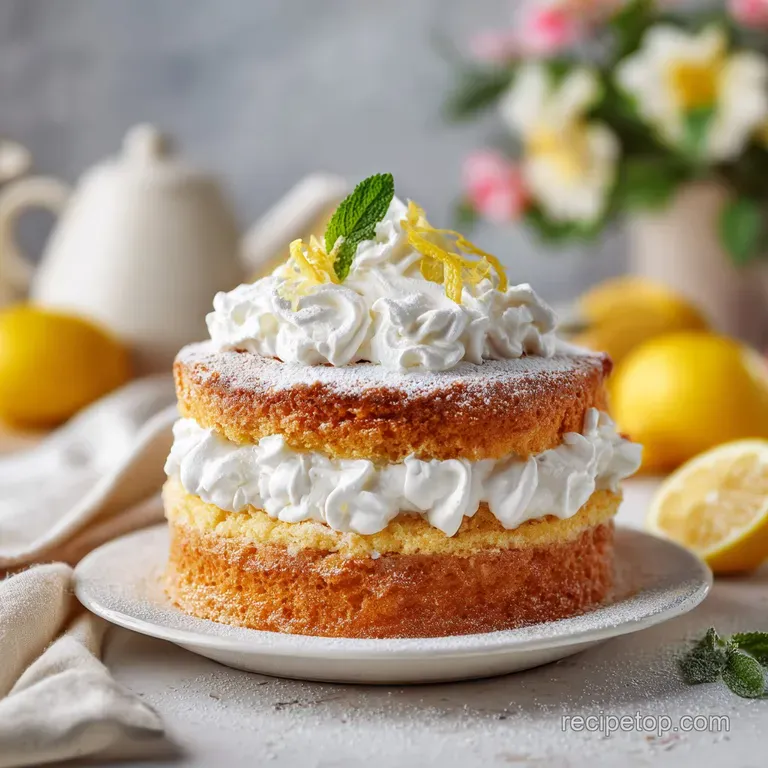
Fluffy Lemon Cake: Light and Airy
- Time: Active 20 minutes, Passive 30 minutes, Total 50 minutes
- Flavor/Texture Hook: Zesty, velvety, and light
- Perfect for: Weekend brunch or a breezy backyard party
- Why Butter Isn't Best Here
- Component Deep Dive and Secrets
- Essential Ingredients and Easy Substitutes
- Tools for Professional Baking Results
- Mastering the Perfect Aerated Batter
- Fixing Common Citrus Baking Blunders
- Swaps for Different Flavor Profiles
- Keeping Your Sponge Fresh Longer
- Why Some Flour Myths Persist
- Presenting Your Zesty Masterpiece
- Recipe FAQs
- 📝 Recipe Card
Why Butter Isn't Best Here
Air Retention: Beating eggs for 8 minutes creates a stable foam that acts as the primary leavening agent, ensuring the sponge rises high without needing heavy butter.
Moisture Control: The neutral oil remains liquid at room temperature, which keeps the crumb feeling silky and soft even after it has cooled completely.
Acid Interaction: Greek yogurt provides the necessary fat while its acidity reacts with the baking powder to create tiny, delicate bubbles for a finer crumb.
| Servings | Ingredient Adjustments | Pan Size | Cook Time |
|---|---|---|---|
| 6 people | Halve all ingredients, use 2 eggs | One 8 inch pan | 22-25 minutes |
| 12 people | Use 250g flour, 4 large eggs | Two 8 inch pans | 30 minutes |
| 24 people | Double all ingredients, 8 eggs | Four 8 inch pans | 35 minutes |
Choosing the right pan size is the first step toward success because if the batter is too shallow, it dries out before it can properly rise. I usually stick with the two 8 inch pans because they give the perfect height to cream ratio in every single slice.
Component Deep Dive and Secrets
| Ingredient | Science Role | Pro Secret |
|---|---|---|
| 4 Large Eggs | Structural Foundation | Room temp eggs double in volume much faster than cold ones. |
| 120g Greek Yogurt | Moisture and Fat | Use full fat for the most velvety texture and better crumb. |
| 2 tbsp Lemon Zest | Essential Oil Delivery | Rub the zest into the sugar first to release all oils. |
| 360ml Heavy Cream | Texture Contrast | Keep your bowl and whisk in the freezer for 10 minutes. |
The Greek yogurt in the batter is a total game changer for this Fluffy Lemon Cake. It adds a subtle tang that balances the sugar while keeping the crumb incredibly tender. If you've ever had a cake that felt a bit dry or "bready," it was likely missing this kind of acidic fat component.
Essential Ingredients and Easy Substitutes
- 250g All purpose flour: The backbone of the cake. Why this? Provides the structure needed to support the air bubbles from the whipped eggs.
- Substitute: Cake flour for an even softer, tighter crumb.
- 175g Granulated sugar: For sweetness and browning. Why this? Sugar assists in stabilizing the egg foam during the long beating process.
- Substitute: Caster sugar (superfine) dissolves even faster into the eggs.
- 4 Large eggs: The primary lift. Why this? They provide the protein structure that holds the cake together as it bakes.
- Substitute: No direct sub for this foam style cake; eggs are vital.
- 120g Full fat Greek yogurt: For moisture. Why this? Adds fat without the heaviness of butter, keeping the lemon flavor bright.
- Substitute: Sour cream works perfectly with the same fat to acid ratio.
- 80ml Neutral oil: For a soft mouthfeel. Why this? Unlike butter, oil doesn't harden when cold, keeping the cake moist.
- Substitute: Melted coconut oil (liquid state) adds a very faint tropical hint.
- 60ml Fresh lemon juice: For that sharp zing. Why this? The acidity reacts with the leaveners and balances the sweetness.
- Substitute: Bottled lemon juice works, but fresh is far superior.
- 360ml Heavy whipping cream: The cloud like topping. Why this? High fat content is necessary to hold a stiff peak for the topping.
- Substitute: Coconut cream (chilled overnight) for a dairy-free topping.
Chef Tip: When you're zesting your lemons, stop the second you see the white pith. That white part is incredibly bitter and can ruin the delicate sweetness of your sugar dusting.
Tools for Professional Baking Results
You don't need a professional kitchen, but a few specific tools make this recipe much easier. A stand mixer is almost essential here because beating eggs for 8 minutes by hand is a workout nobody wants.
If you’re using a hand mixer, just be prepared to stay patient it might take an extra couple of minutes to reach that "ribbon stage" where the batter falls back on itself in thick folds.
I also swear by parchment paper. There is nothing more heartbreaking than a beautiful lemon sponge sticking to the bottom of the pan. Even if your pans are "non stick," use the parchment. It’s the best insurance policy you can buy for your kitchen.
Mastering the Perfect Aerated Batter
- Preheat your oven to 350°F (175°C). Prepare two 8 inch round cake pans by greasing them and lining the bottoms with parchment paper.
- Sift the dry ingredients. Combine 250g flour, 2 tsp baking powder, and 0.5 tsp sea salt, sifting them twice to ensure no lumps remain. Note: Sifting twice is the secret to that "fluffy" descriptor we're chasing.
- Whip the eggs and sugar. Use a stand mixer with a whisk attachment to beat 4 large eggs and 175g granulated sugar on high for 5 to 8 minutes until pale and tripled in volume.
- Mix the wet flavorings. In a small bowl, whisk together 120g Greek yogurt, 80ml neutral oil, 60ml lemon juice, and 2 tbsp lemon zest.
- Combine the mixtures. Gently fold the flour mixture and the yogurt mixture into the whipped eggs in three alternating batches. Note: Use a large spatula and a "cut and fold" motion to keep the air in.
- Bake the sponges. Divide the batter into the pans and bake for 25 to 30 minutes until a toothpick comes out clean.
- Cool completely. Let the cakes sit in the pans for 10 minutes, then move to a wire rack to cool entirely before you even think about the cream.
- Stabilize the whipped cream. Beat 360ml chilled heavy cream, 30g confectioners' sugar, 0.5 tsp lemon extract, and 2 tbsp Greek yogurt until stiff peaks form.
- Assemble the layers. Place one cake on a plate, spread half the cream, top with the second cake, and cover with the remaining cream.
- Add the finish. Dust the top with 10g powdered sugar and decorate with thin lemon slices just before serving.
| Metric | Checkpoint | Why It Matters |
|---|---|---|
| Egg Volume | Tripled in 8 mins | Ensures the cake has enough air to rise without butter. |
| Oven Temp | 350°F (175°C) | The sweet spot for browning without drying out the edges. |
| Flour Prep | Sifted 2 times | Prevents "flour pockets" that can ruin a delicate sponge. |
Fixing Common Citrus Baking Blunders
Why Your Cake Sunk in the Middle
If your cake looks like a crater, it usually comes down to one of two things: the oven door was opened too early, or the eggs weren't whipped long enough. When we rely on the foam method, those air bubbles are the only thing holding up the structure of the cake while the flour sets.
If you open the oven before the 20 minute mark, the sudden drop in temperature can pop those bubbles before they're strong enough to stand on their own.
Another culprit is over mixing during the folding stage. I know it's tempting to stir everything until it's perfectly smooth, but every stroke of the spatula is deflating your hard work. It’s better to have a tiny streak of flour left than to have a flat, dense disc of a cake.
| Problem | Root Cause | Solution |
|---|---|---|
| Dense Crumb | Over folding the batter | Use a "figure-8" motion and stop as soon as streaks vanish. |
| Runny Cream | Warm bowl or cream | Chill your whisk and bowl for 15 mins before whipping. |
| Bitter Aftertaste | Zested the white pith | Only zest the yellow outer skin of the lemon. |
The key to a successful Fluffy Lemon Cake is patience during the egg whipping stage. If you stop at 3 minutes because it looks "bubbly enough," your cake will likely collapse. You're looking for a thick, pale yellow cream that leaves a trail when you lift the whisk.
Common Mistakes Checklist
- ✓ Ensure eggs are at room temperature before you start whipping.
- ✓ Don't skip the sifting; it's mandatory for a light texture.
- ✓ Use a heavy duty spatula for folding to avoid crushing the air.
- ✓ Let the cakes cool 100% or the whipped cream will melt instantly.
- ✓ Only dust with powdered sugar right before serving to prevent it from dissolving.
Swaps for Different Flavor Profiles
If you want to branch out from the classic lemon, this sponge is incredibly versatile. You can swap the lemon juice and zest for lime to make a "Key Lime Cloud Cake" that is absolutely stunning in the summer. Just make sure you use the same measurements.
For a deeper, more floral note, try using Meyer lemons if they're in season; they're a bit sweeter and have a beautiful orange like aroma.
For those looking for a different kind of treat, you might find that this light citrus profile reminds you of other fruit forward bakes. If you’re in the mood for something with a bit more chew, my Soft Carrot Cake Cookies use a similar cream cheese inspired tang that hits those same flavor notes.
| Feature | Fast Method | Classic Method |
|---|---|---|
| Fat Source | Neutral Oil / Yogurt | Creamed Butter |
| Texture | Light and Springy | Dense and Velvety |
| Prep Time | 20 minutes | 45 minutes |
The "Fast Method" we're using here actually yields a much lighter result than the classic pound cake style. It’s more of a sponge cake, which is why it pairs so beautifully with a lighter topping like whipped cream rather than a heavy, sugary buttercream.
Keeping Your Sponge Fresh Longer
Storage: This cake is best eaten on the day it’s assembled because the whipped cream can start to soften the sponge over time. If you have leftovers, keep them in an airtight container in the fridge for up to 3 days.
The oil and yogurt in the batter actually help keep the cake moist even when it’s cold, which is a huge advantage over butter based cakes that can turn hard in the refrigerator.
Zero Waste: Don’t throw away those lemons after you’ve zested and juiced them! I like to slice the remaining rinds and simmer them with a bit of sugar and water to make a quick lemon simple syrup.
You can drizzle this over the sponges before adding the cream for an extra punch of moisture and flavor. Alternatively, throw the squeezed halves into your garbage disposal to freshen up your kitchen sink.
Freezing: You can freeze the un frosted sponges easily. Wrap them twice in plastic wrap and then a layer of foil. They’ll stay perfect for up to 2 months. When you're ready to eat, just thaw them on the counter for a few hours before whipping up your cream and assembling.
Why Some Flour Myths Persist
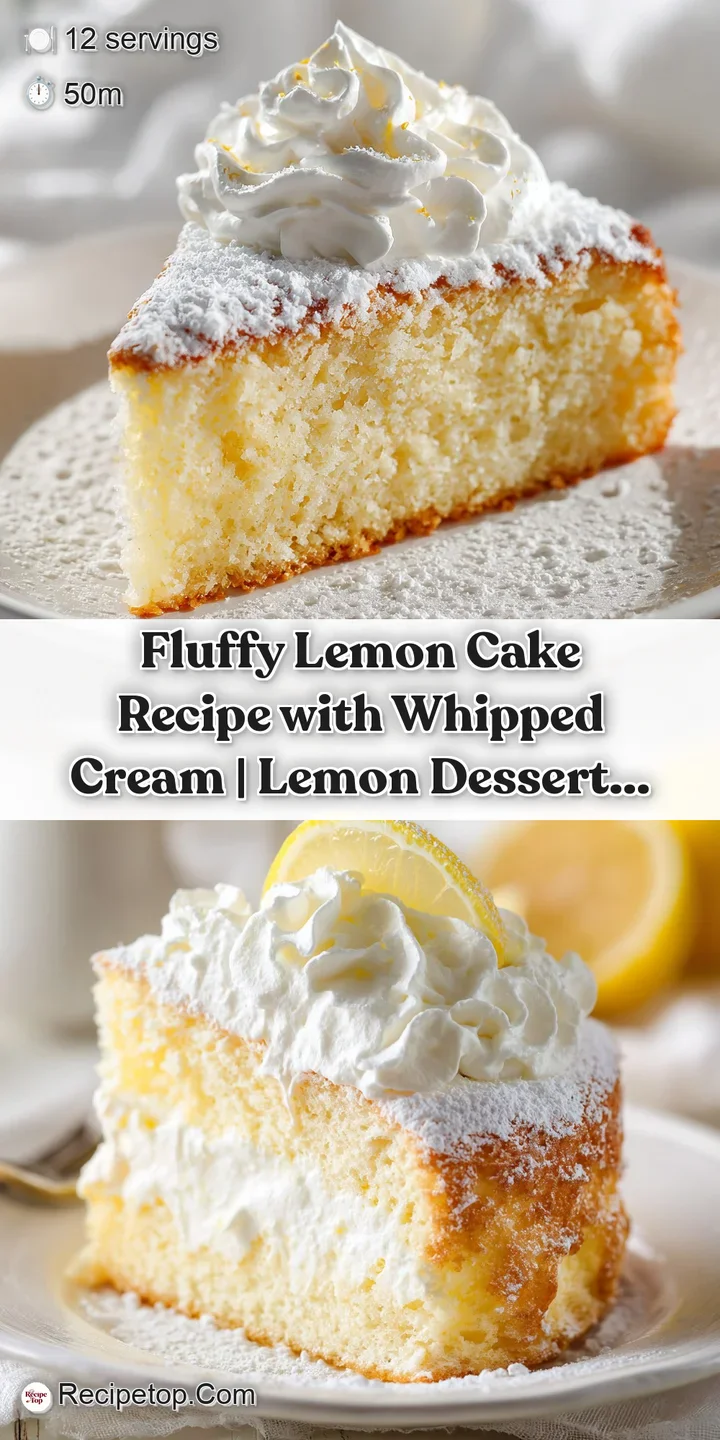
A common misconception is that you need "Cake Flour" for a fluffy result. While cake flour has less protein and can result in a finer crumb, sifting all purpose flour twice achieves a remarkably similar effect for this Fluffy Lemon Cake.
The double sifting incorporates so much air that the slightly higher protein in AP flour doesn't result in a tough cake instead, it provides the perfect amount of "backbone" to support the whipped cream.
Another myth is that you must use a specific brand of yogurt. While I prefer a high fat Greek yogurt for the richness it provides, you can actually use plain whole milk yogurt in a pinch.
The science is simply about the acidity and the fat content; as long as those are present, the chemistry of the bake will remain intact.
Presenting Your Zesty Masterpiece
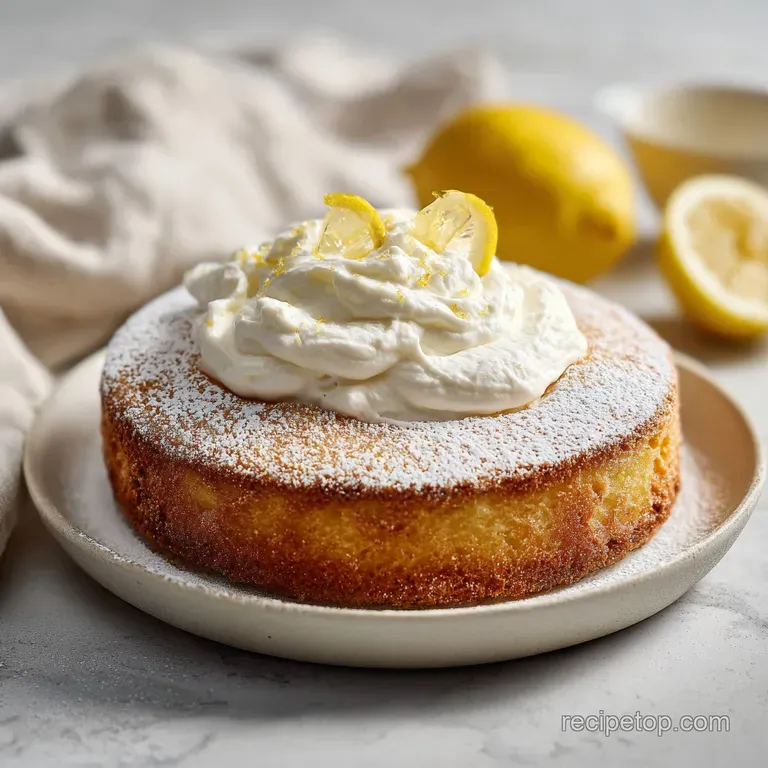
When it comes to serving, less is often more. The beauty of this Fluffy Lemon Cake Recipe with Whipped Cream and Powdered Sugar Dusting is in its rustic, cloud like appearance. I like to pile the cream on quite thick in the middle so that when you put the top layer on, it slightly bulges out the sides.
It looks generous and inviting.
If you’re serving this at a dinner party and want to offer a variety of textures, you could pair a slice of this with something much darker and richer on the side. For example, the contrast between this bright lemon and a slice of Mississippi Mud Cake provides a fantastic "sweet and deep" experience for your guests.
- For a tarter bite
- Increase the lemon zest by 1 tablespoon and reduce the sugar in the cream by 10g.
- For a sturdier cake
- Substitute 50g of the AP flour with almond flour for a tighter, nuttier crumb.
- For a "Lemonade" style
- Add a tiny drop of yellow food coloring and serve with a sprig of fresh mint.
There is honestly nothing better than that first bite where the powdered sugar hits your tongue, followed by the tart lemon and the cold cream. It’s a total sensory experience that feels much more complicated than it actually is.
Trust the process, whip those eggs until they can't whip any more, and you'll have a dessert that everyone will be asking for again next week. Happy baking!
Recipe FAQs
Is it necessary to sift the flour twice?
Yes, this is essential for the texture. Sifting twice ensures maximum aeration, which is the secret to getting that signature fluffy crumb in this recipe.
How to ensure the whipped cream does not melt on the cake?
Cool the cake layers completely on a wire rack before assembling. Any residual heat will cause the cream to break down immediately, ruining the structure of your dessert.
Why is it important to whip the eggs for 5-8 minutes?
The eggs must triple in volume to provide the necessary lift. This aeration process acts as the primary leavening agent; if you enjoyed this light texture, you can apply the same air-incorporation technique to our Blueberry Blondies for a similar lift.
Can I dust the powdered sugar on the cake ahead of time?
No, wait until right before serving. Dusting too early causes the sugar to dissolve into the whipped cream, leaving you with a sticky surface rather than a beautiful finish.
Is it true the eggs must be cold?
No, this is a common misconception. You must use room temperature eggs, as they whip much faster and hold more air than cold ones, which is critical for the cake's height.
How to properly fold the batter?
Use a heavy duty spatula to gently scrape the bottom and lift the batter over the top. Rotating the bowl as you work keeps the air bubbles intact; aggressive mixing will deflate the batter and result in a dense cake.
How to tell when the cakes are finished baking?
Insert a toothpick into the center and remove it to check for a clean surface. Bake for 25 30 minutes at 350°F, but check slightly early to avoid overbaking, which dries out the sponge.
Fluffy Lemon Cream Cake
Ingredients:
Instructions:
Nutrition Facts:
| Calories | 339 kcal |
|---|---|
| Protein | 6.3 g |
| Fat | 19.1 g |
| Carbs | 34.5 g |
| Fiber | 0.6 g |
| Sugar | 20.4 g |
| Sodium | 121 mg |
